Walking while working
WalkingPad P1 vs C2: simple storage or more room?
P1 and C2 are both compact, but the nicer choice depends on whether your priority is a lighter routine or a roomier walking surface. Compare speed, belt, weight, and storage in one decision in the room you have.
Choose P1 for 0.3-mph starts and a 16.5-inch belt; choose C2 for 55-lb body and 20.4-inch folded width.
Slow desk walkers fit P1; storage-constrained rooms fit C2 narrower folded shape.
P1 weighs 62 lb and lacks a panel display; C2 lists 220 lb and a 1-mph start.
Our take is based on published specifications and linked sources. We have not hands-on tested these products. Some links may earn a commission.
Buying links, offers & research notes Expand
A closer look
Choose the fit signal that matters first
Both are direct WalkingPad links. Check the exact US variant, then compare the published speed, belt, capacity, and storage constraints below.
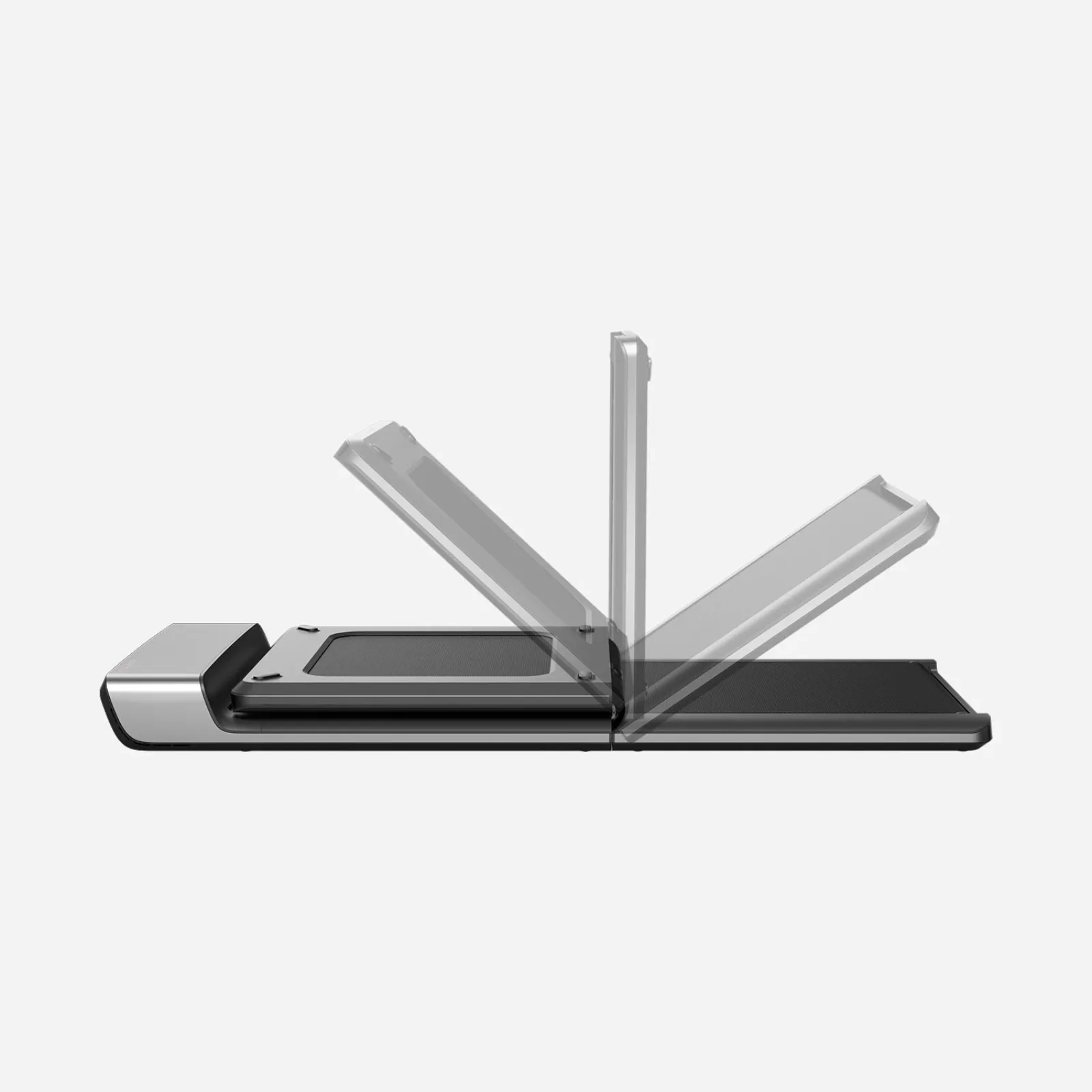 Photo: manufacturer
WalkingPad P1
WalkingPad
Selection signal
Choose when the lowest published starting speed and wider walking area matter
Official specs checked September 3, 2026
See current price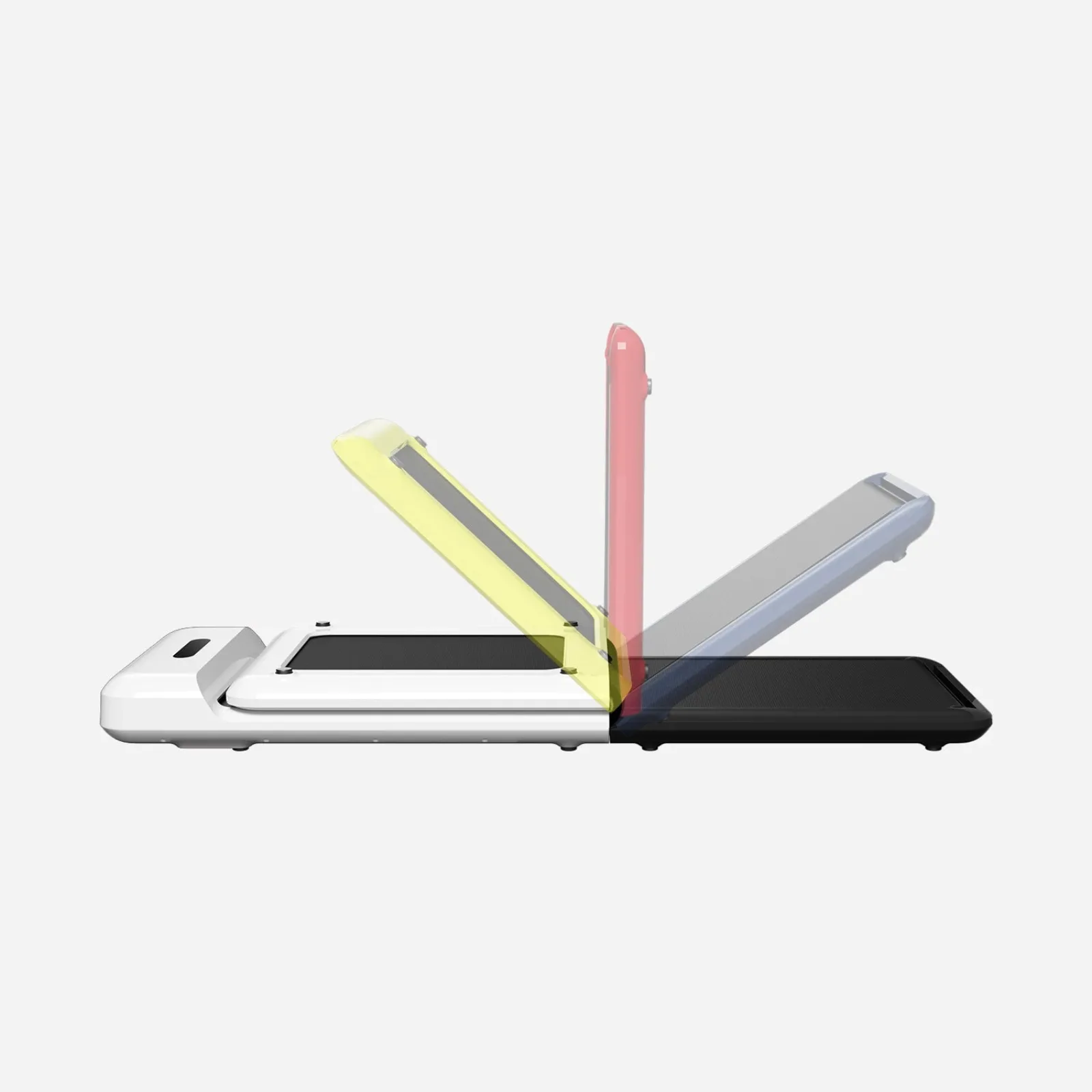 Photo: manufacturer
WalkingPad C2
WalkingPad
Selection signal
Choose when folded width and lower listed machine weight matter most
Official specs checked September 3, 2026
See current priceLower start
P1 lists 0.3 mph; C2 lists 1 mph on the current US technical tables.
Width trade
P1 lists a 16.5-inch walking-area width; C2 lists 15.7 inches in its technical table.
Lighter C2
C2 lists 55 lb net; P1 lists 62 lb net. Carrying effort still depends on the route and grip.
Same fold length
Both pages list a 32.5-inch folded length, but width and height differ.
Product-body size is not desk-fit clearance.
The outside height on a product page does not confirm the walking-surface height, keyboard height, or a storage position approved for every setup.
Side-by-side evidence
The P1 vs C2 differences that can change your choice
Values below are transcribed from the current US product pages checked September 3, 2026. When the product page and official comparison page use different rounded values, the difference is shown instead of silently selecting the convenient number.
| Decision factor | WalkingPad P1 | WalkingPad C2 | What it means |
|---|---|---|---|
| Walking area | 47 × 16.5 in | 47.2 × 15.7 in technical table | P1 lists 0.8 in more width; C2 lists 0.2 in more length. C2’s feature block says 15.8 in, so this page preserves the technical-table value and flags the discrepancy. |
| Speed range | 0.3–3.75 mph | 1–4 mph | P1 lists the lower starting point; C2 lists the slightly higher top end. WalkingPad’s comparison page rounds the P1 to 1–3.7 mph, so use the exact product page for the selected US listing. |
| Stated user capacity | 220 lb | 220 lb | A tie on the current US product pages. A maximum rating is not a recommendation to operate continuously at the limit; review the exact manual and leave reasonable margin. |
| Net machine weight | 62 lb | 55 lb | C2 is 7 lb lighter on the current technical tables. That does not prove easier or safer carrying because grip points, stairs, and lifting technique are not specified here. |
| Motor / power listing | Brush motor · 746 W input | 3 HP brushless motor | These are different manufacturer labels, not a matched noise, durability, speed-under-load, or electricity-use test. Do not convert them into a universal winner. |
| Speed controls | App · FootSense™ · remote controller | App · FootSense™ · remote controller | The technical tables list the same control categories. They do not prove identical pairing steps, app behavior, speed increments, remote range, or response across revisions. |
| Display evidence | No panel display; remote display feedback data | Feature block states an LED screen with speed, time, distance, and calories; technical table omits a display field | The P1 technical table states its display boundary explicitly. The C2 feature block states an LED screen and four shown values, while its technical table omits a comparable display row. Verify the delivered model’s manual if the exact display matters. |
| Unfolded outside body | 56.5 × 21.5 × 5 in | 56.9 × 20.4 × 4.9 in | C2 is 1.1 in narrower and 0.1 in lower; P1 is 0.4 in shorter. These are outside body dimensions, not confirmed standing-surface heights or desk-clearance measurements. |
| Folded outside body | 32.5 × 21.5 × 5 in | 32.5 × 20.4 × 5.4 in | Same listed folded length. C2 is narrower; P1 is lower. The opening and storage orientation decide which shape works. |
| Power / region | US version: 110V | 110V on current US page | Use the page for the purchase region and confirm the exact rating and plug before connecting the machine. |
| Colors listed | Silver grey and pink | Red, yellow, blue, black, white, grey | Color availability can change and is not a fit or workability criterion. |
Scope note: these are outside product dimensions and manufacturer-listed specifications. They are not independent tests, deck-height measurements, noise results, or a certification that either model fits every desk or user.
Measure before choosing
Will P1 or C2 fit under your furniture?
Neither is smaller in every direction. Both list a 32.5-inch folded length; C2 is 1.1 inches narrower, while P1 is 0.4 inch thinner. Measure the narrowest opening and the usable space behind it, including furniture legs and center supports.
A narrow opening can favor C2
Example: 34 × 21 × 6 inches. C2 clears the published dimensions with this tool’s 0.5-inch planning allowance. P1 exceeds the opening width.
A low opening can rule out C2
Example: 34 × 23 × 5.2 inches. P1 fits only on the listed dimensions, without the full handling allowance; C2 is too tall. Treat the P1 result as tight, not a comfortable fit.
Example opening only — enter your own measurements before choosing.
Folded dimensions rechecked October 15, 2026: P1 official specifications and C2 official specifications. The examples are dimensional calculations, not physical fit tests. The 0.5-inch allowance is a planning margin, not manufacturer-required clearance. Check the insertion path and storage instructions; this tool does not approve upright storage or operating beneath furniture.
Quick verdicts
Choose by the constraint you actually have
Neither model is ranked by an unverified performance promise. These notes translate the published rows into a decision while keeping the unknowns visible.
WalkingPad P1
Choose when the lowest published starting speed and wider walking area matter
- Selected variant
- Current US P1 Classic listing; 220 lb stated capacity
- Walking area
- 47 × 16.5 in walking area
- Speed
- 0.3–3.75 mph on the current US technical table
- Stated load
- 220 lb
- Net / gross weight
- 62 lb net · 68 lb gross
- Motor listing
- Brush motor · 746 W power input
- Controls
- KS Fit app · FootSense™ · remote controller
- Display
- No panel display; remote provides display feedback data
- Folded body
- 32.5 × 21.5 × 5 in
- Unfolded body
- 56.5 × 21.5 × 5 in
- Power / region
- US version: 110V
- Colors listed
- Silver grey and pink listed
- Assembly
- No installation or tools required, according to the product page
Why choose it
The P1 technical table lists a 0.3-mph starting point and a 47 × 16.5-inch walking area. It also keeps the same 32.5-inch folded length as the C2, so it is the better paper fit when slow desk walking or side-to-side belt width is the constraint.
Why skip it
Skip the P1 if you need an on-machine panel display, the C2’s Apple Watch note, or a narrower folded width. The P1 page lists no panel display and a 21.5-inch folded width; FootSense is listed for both models, so it is not a reason to choose one over the other.
Storage read
The P1 folds to 32.5 × 21.5 × 5 inches. Its 0.4-inch lower folded height is offset by a 1.1-inch wider folded body than the C2. Measure the opening, floor route, mat thickness, and approved storage orientation before ordering.
Official source: The current US P1 page lists the P1 Classic, 0.3–3.75 mph, a 47 × 16.5-inch walking area, 220-lb capacity, 62-lb net weight, brush motor, 746 W input, KS Fit, FootSense, remote display feedback, no panel display, 110V, two listed colors, and ready-to-use setup. Open product page
WalkingPad C2
Choose when folded width and lower listed machine weight matter most
- Selected variant
- Current US C2 listing; 220 lb stated capacity
- Walking area
- 47.2 × 15.7 in in the technical table; the feature block says 15.8 in
- Speed
- 1–4 mph on the current US technical table
- Stated load
- 220 lb
- Net / gross weight
- 55 lb net · 62 lb gross
- Motor listing
- 3 HP brushless motor
- Controls
- KS Fit app · FootSense™ · remote controller
- Display
- Feature block states an LED screen showing speed, time, distance, and calories; technical table omits a display field
- Folded body
- 32.5 × 20.4 × 5.4 in
- Unfolded body
- 56.9 × 20.4 × 4.9 in
- Power / region
- 110V on the current US page
- Colors listed
- Red, yellow, blue, black, white, and grey listed
- Assembly
- Fully assembled
Why choose it
The C2 is listed at 20.4 inches wide when folded and 55 lb net, versus the P1’s 21.5-inch folded width and 62 lb net. It also lists a 1–4 mph range, app, FootSense, and remote control on the current US technical table.
Why skip it
Skip the C2 if you need the P1’s 0.3-mph starting point or 16.5-inch published walking-area width. The C2’s current page also shows two different feature/spec values for belt width, so verify the exact listing and manual if that tenth of an inch affects your fit.
Storage read
The C2 and P1 both list a 32.5-inch folded length. The C2 is 1.1 inches narrower but 0.4 inch taller when folded, which can decide a closet, under-bed opening, or doorway. Add the mat and any accessories to the real clearance check.
Official source: The current US C2 page lists 1–4 mph, a 47.2 × 15.7-inch technical walking area, 220-lb capacity, 3 HP brushless motor, 55-lb net weight, app/FootSense/remote control, EVA & PET shock absorption, 110V, body dimensions, six listed colors, and fully assembled setup. Its feature block also states an LED screen showing speed, time, distance, and calories; the technical table does not provide a separate display field. Open product page
The short decision rule
P1 for the slowest listed start or wider belt. C2 for the narrower folded body and lower listed weight.
If neither constraint decides the purchase, the pages show the same stated capacity and the same folded length. Do not use motor labels, an unverified noise assumption, or an old regional listing to manufacture a winner.
Fit order
Measure before you choose
- 01Choose the exact US listing and confirm that the displayed variant is the one you intend to order.
- 02Check folded length, width, and height against the real opening and the full moving route.
- 03Add mat or accessory thickness and calculate desk clearance separately from body dimensions.
- 04Read the exact manual for controls, storage position, and power requirements before connecting it.
Keep the source/version boundary visible. The P1 product page lists a 0.3-mph technical minimum while the official comparison page rounds it to 1 mph. The C2 feature block says 15.8 inches of walking-area width while its technical table says 15.7 inches. These are not independent measurements; recheck the exact listing and manual if either small difference controls your decision.
Email and light keyboard work
The P1’s published 0.3-mph starting point and 16.5-inch width are the relevant paper checks when slow pacing and lateral room matter. They do not prove that a specific desk, keyboard, or user will be comfortable at that speed.
Narrow storage route
The C2’s listed folded width is 20.4 inches versus 21.5 inches for the P1, while P1 is listed 0.4 inch lower when folded. The winning model is whichever shape fits your actual opening, mat, and permitted storage orientation.
Calls and long sessions
Neither official page provides a matched noise test with speed, distance, floor, or user conditions. Do not promise a quiet room or neighbor-safe result from a motor label; inspect the official manual and make your own room-specific decision.
Read the noise-evidence guideFAQ
P1 vs C2 questions, kept within the evidence
What is the main difference between the WalkingPad P1 and C2?
The current US product pages separate them most clearly on starting speed, body shape, and listed weight. P1 lists 0.3–3.75 mph, a 47 × 16.5-inch walking area, 62 lb net weight, and 32.5 × 21.5 × 5 inches folded. C2 lists 1–4 mph, a 47.2 × 15.7-inch technical walking area, 55 lb net weight, and 32.5 × 20.4 × 5.4 inches folded. Both list 220 lb capacity and app/FootSense/remote control categories.
Which WalkingPad is better for slow under-desk walking, P1 or C2?
The P1 has the lower published starting point: 0.3 mph versus 1 mph for the C2 on the current US technical tables. That is a specification-based reason to inspect the P1 first for very slow desk walking. It does not prove that every user will find either machine comfortable or controllable at a particular speed.
Which has the wider belt, WalkingPad P1 or C2?
The P1 page lists a 47 × 16.5-inch walking area. The C2 technical table lists 47.2 × 15.7 inches, while a C2 feature block says 15.8 inches. On the clearest technical-table comparison, P1 has 0.8 inches more published width; the C2 page’s internal discrepancy should be checked against the exact unit and manual.
Which is lighter, the WalkingPad P1 or C2?
The current US technical tables list the P1 at 62 lb net and the C2 at 55 lb net, a 7-lb difference. This is a listed machine weight, not a guarantee about carrying effort. Consider grip points, stairs, mat, doorway width, and your own moving route.
Which is smaller when folded, the WalkingPad P1 or C2?
They list the same folded length at 32.5 inches, but their shapes differ. P1 is 32.5 × 21.5 × 5 inches; C2 is 32.5 × 20.4 × 5.4 inches. C2 is narrower, while P1 is lower. Measure the tightest opening and include the mat and any permitted accessories.
Does the WalkingPad P1 or C2 have a screen?
The P1 technical table explicitly says “Panel Display Screen: No screen display” and “Remote Display Screen: Display feedback data.” The C2 feature block explicitly states an LED screen showing speed, time, distance, and calories, but its technical table does not provide a separate display field. Keep both pieces of evidence visible and confirm the exact C2 manual or listing if on-machine stats matter.
Are the P1 and C2 motor specifications directly comparable?
No. WalkingPad lists the P1 as a brush motor with 746 W power input and the C2 as a 3 HP brushless motor. The pages do not define matched measurement conditions, so the labels cannot establish which one is quieter, lasts longer, uses less electricity, or performs better under a particular load.
Did WorkChoose test the WalkingPad P1 or C2, and are these links affiliate links?
No. WorkChoose has not personally tested either machine. This page is a source-backed comparison of the current WalkingPad US product pages and official comparison page. The product buttons go directly to WalkingPad; no affiliate tracking is active at the time of this review.
Continue the decision
Connect P1 vs C2 to the rest of the desk
Main walking-pad guide
Compare current models by belt, profile, speed, capacity, and desk fit.
Read nextComparison chart
See the broader model set when P1 and C2 are not the only candidates.
Read nextA1 Pro vs P1
Compare P1 with A1 Pro on minimum speed, display, belt width, and selected capacity.
Read nextZ1 vs C2
Check the lighter Z1 and narrower-folded C2 when storage is the deciding constraint.
Read nextP1 vs Z1
Compare P1 with Z1 on starting speed, belt shape, listed weight, capacity, and display evidence.
Read nextOfficial source trail
Recheck the exact US listing before ordering.
Source boundary: official product pages, comparison page, and FAQ checked September 3, 2026. This page does not claim price, independent testing, medical benefit, or universal fit. Product specifications, selected options, availability, and regional terms can change.