Walking while working
Best walking pads for under-desk use: clear the fit check
Under-desk walking is a coordination problem between pad, desk, chair, monitor, and pace. Compare low-profile footprints and controls while keeping finished desk height and the safety route in view for ordinary workdays at home before moving furniture around.
Start with a low body and reachable controls; choose R3 only when its larger belt and running range earn the desk space.
Tight rooms fit compact E1L or Z1; mixed walking and running routines fit R3.
Body height is not belt height; measure floor-to-surface, keyboard position, chair route, and stopping space.
Our take is based on published specifications and linked sources. We have not hands-on tested these products. Some links may earn a commission.
Buying links, offers & research notes Expand
A closer look
Choose the constraint that matters first
Use belt room, starting speed, and total body width as your first fit checks. Prices and inventory are intentionally left for the live manufacturer page.
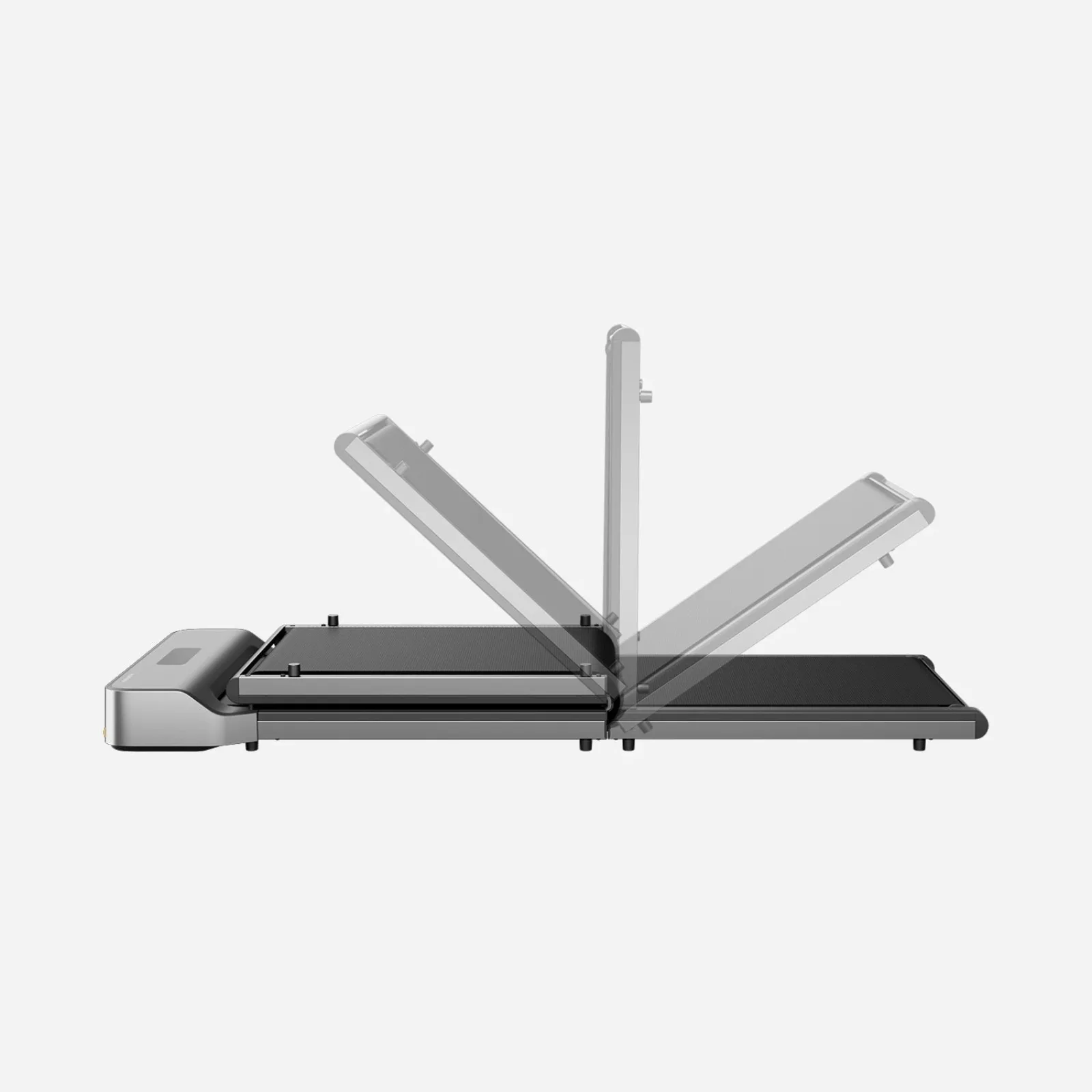 Photo: manufacturer
WalkingPad Z1
WalkingPad
Walking area
47.6 × 15.7 in
Official specs checked September 3, 2026
See current price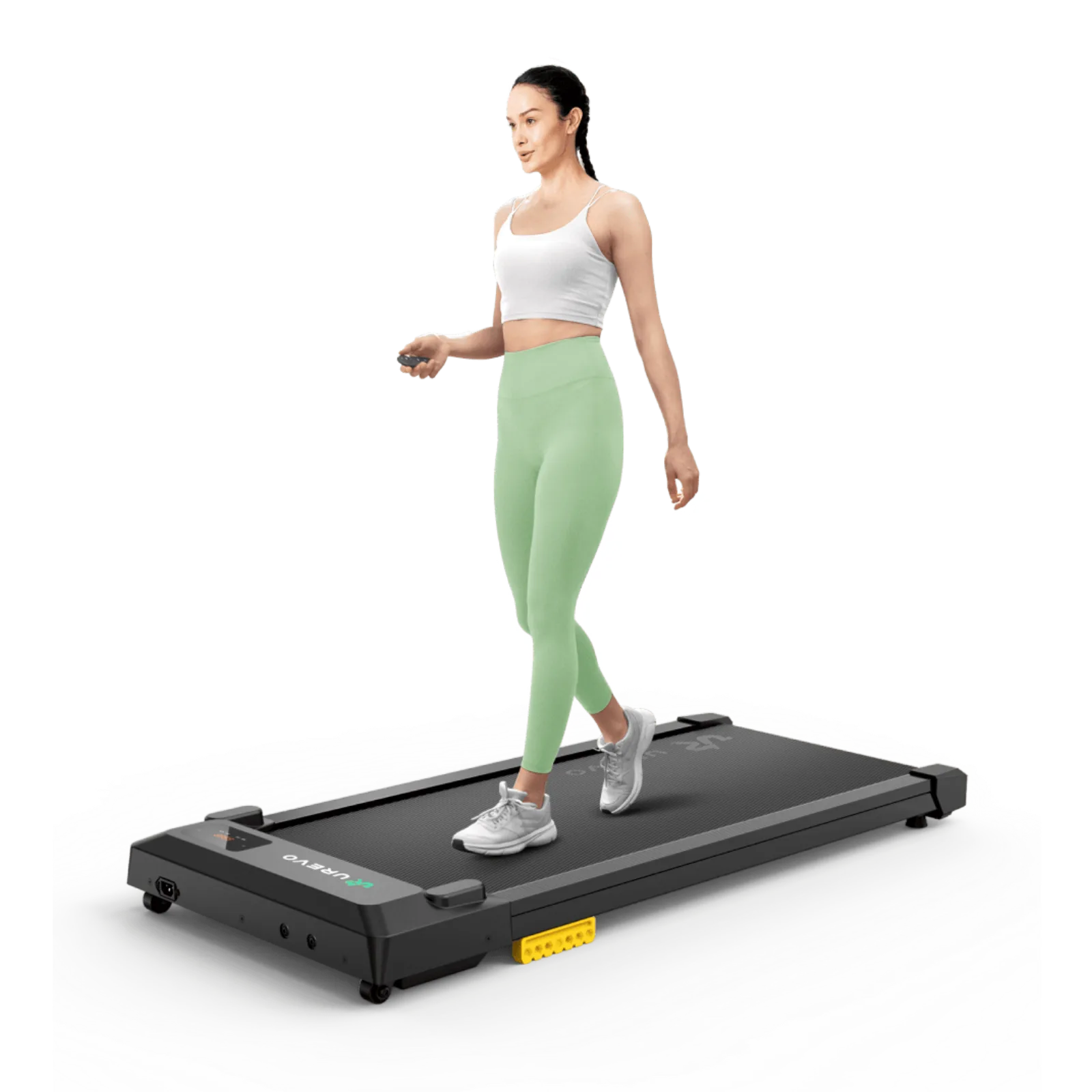 Photo: manufacturer
UREVO SpaceWalk E1L
UREVO
Minimum speed
0.6 mph
Official specs checked September 3, 2026
See current price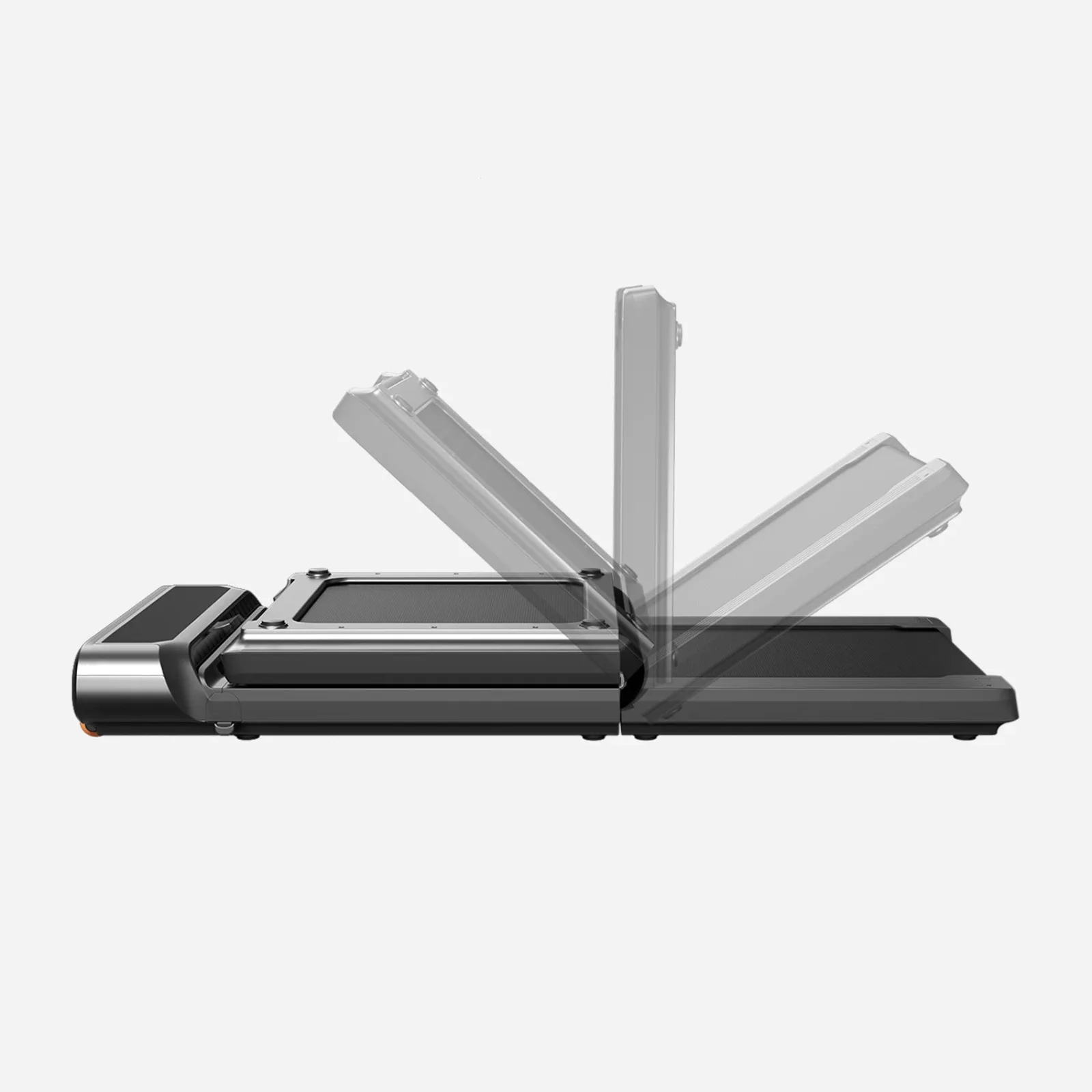 Photo: manufacturer
WalkingPad R3 Walking Pad — 330 lb SoftStep variant
WalkingPad
Walking area
47.2 × 17.3 in
Official specs checked September 3, 2026
See current price4 models
Exact manufacturer configurations compared
35.43–47.6 in
Published walking-belt lengths
0.5–1 mph
Minimum available speeds
A lower standing surface is easier—but still raises your keyboard.
Measure floor to belt surface on the exact pad. Do not substitute a published overall body height.
Compare the fit
The shortlist at a glance
Swipe the table sideways to compare every column.
| Model | Overall size | Walking area | Speed | Weight / load | Best fit | Next step |
|---|---|---|---|---|---|---|
| WalkingPad Z1 | 56.1 × 22 × 4.1 in | 47.6 × 15.7 in | 1–4 mph | 51 lb / 242 lb | Best foldable fit for most home offices | Check price & specs |
| UREVO SpaceWalk E1L | 42.1 × 19.3 × 4.2 in | 35.43 × 15 in | 0.6–4 mph | 36.59 lb / 265 lb | Best lightweight budget choice | Check price & specs |
| WalkingPad R3 Walking Pad — 330 lb SoftStep variant | 57.8 × 26.5 × 6.1 in | 47.2 × 17.3 in | 1–4 mph | 66.3 lb / 330 lb for this variant; 265 lb Hybrid variants also listed | Best wide, long walking surface | Check price & specs |
| WalkingPad H1 Plus | 50 × 21 × 6.1 in | 39.4 × 15.4 in | 0.5–4 mph | 51 lb / 243 lb | Lowest published starting speed in this shortlist | Check price & specs |
WalkingPad Z1
Best foldable fit for most home offices
- Walking area
- 47.6 × 15.7 in
- Product / user load
- 51 lb / 242 lb
- Storage
- Folds to 31.8 × 22 × 5.4 in
Why it made the list
It combines a long belt with a 4.1-inch published unfolded body profile and folds nearly in half, so it addresses both walking fit and post-work storage. WalkingPad does not label 4.1 inches as the belt surface height, so measure that separately for a desk-height calculation.
Why it may not fit
Its one-mile-per-hour minimum is faster than the 0.6 mph minimum on both UREVO models here. Slow typists should treat that as a real constraint.
UREVO SpaceWalk E1L
Best lightweight budget choice
- Walking area
- 35.43 × 15 in
- Product / user load
- 36.59 lb / 265 lb
- Storage
- Transport wheels; does not fold
Why it made the list
At 36.59 pounds, it is the easiest pad in this shortlist to move aside. The 0.6 mph minimum also gives more room to find a typing-friendly pace.
Why it may not fit
Its 35.43-inch belt is much shorter than both WalkingPad options. Users with a long stride should not buy on low price and light weight alone.
WalkingPad R3 Walking Pad — 330 lb SoftStep variant
Best wide, long walking surface
- Walking area
- 47.2 × 17.3 in
- Product / user load
- 66.3 lb / 330 lb for this variant; 265 lb Hybrid variants also listed
- Storage
- Folds to 33.5 × 26.5 × 7.5 in
Why it made the list
The 47.2-by-17.3-inch walking area is the widest in this shortlist while retaining WalkingPad’s folding deck.
Why it may not fit
It is also the widest and heaviest product body in this shortlist. Its 6.1-inch figure is the published unfolded product height—not a labeled deck-to-belt measurement—so check leg clearance and measure the standing surface before calculating keyboard height.
WalkingPad H1 Plus
Lowest published starting speed in this shortlist
- Walking area
- 39.4 × 15.4 in
- Product / user load
- 51 lb / 243 lb
- Storage
- Does not fold; built-in transport wheels
Why it made the list
Its 0.5 mph minimum gives the widest low-speed adjustment range in this shortlist. The published 50-by-21-inch footprint is also narrower and shorter than either folding WalkingPad model.
Why it may not fit
The page lists a 6.1-inch overall product height, not a verified belt-surface height at every incline setting. Measure the actual standing surface before using it in a desk-height calculation; the unit also does not fold.
Choose around work, not workouts
- Typing: prioritize a low minimum speed, stable controls, and enough belt length for an unhurried stride.
- Calls: manufacturer “quiet” labels are only a starting point; floor vibration and microphone placement still matter.
- Storage: measure the actual storage opening and move path, not only the pad’s folded dimensions.
- Safety: follow the model manual, use a clear level area, and stop before a task requires more attention than walking permits.
Current first pick
WalkingPad Z1 for foldable home-office fit
Choose it for its published 47.6-inch belt and compact folded footprint. Skip it if a 1 mph minimum is too fast for your typing pace.
Related decision checks
Check the constraint that could change your pick.
Frequently asked questions
What size walking pad is best for under a desk?
Use total product width to check the space between desk legs, walking-belt length and width to check stride room, and the measured belt-surface height to check keyboard height. A manufacturer’s overall body height is not automatically the standing-surface height, so no single dimension answers all three.
Is 0.6 mph or 1 mph better for typing?
A lower minimum gives you more choice. Some people can type comfortably at 1 mph; others need a slower pace for precise mouse or keyboard work. Treat the minimum speed as a workflow feature, not a fitness score.
Can a walking pad damage a standing desk?
The pad should not touch the frame, cables, or controls. Leave enough clearance for belt movement, step-off, and the desk’s own travel, then follow both manufacturers’ placement and maintenance instructions.
Are manufacturer noise ratings comparable?
Usually not without matching test conditions. Motor sound, footfall, floor construction, speed, footwear, microphone placement, and room acoustics can all change what a coworker or neighbor hears.