Walking while working
Best compact walking pads for apartments: storage and belt width
A compact walking pad can still fail in an apartment when the belt feels too narrow, the folded body will not clear the storage route, or vibration travels through the floor. Compare use footprint, belt width, weight, start speed, desk clearance, and the unknowns before buying.
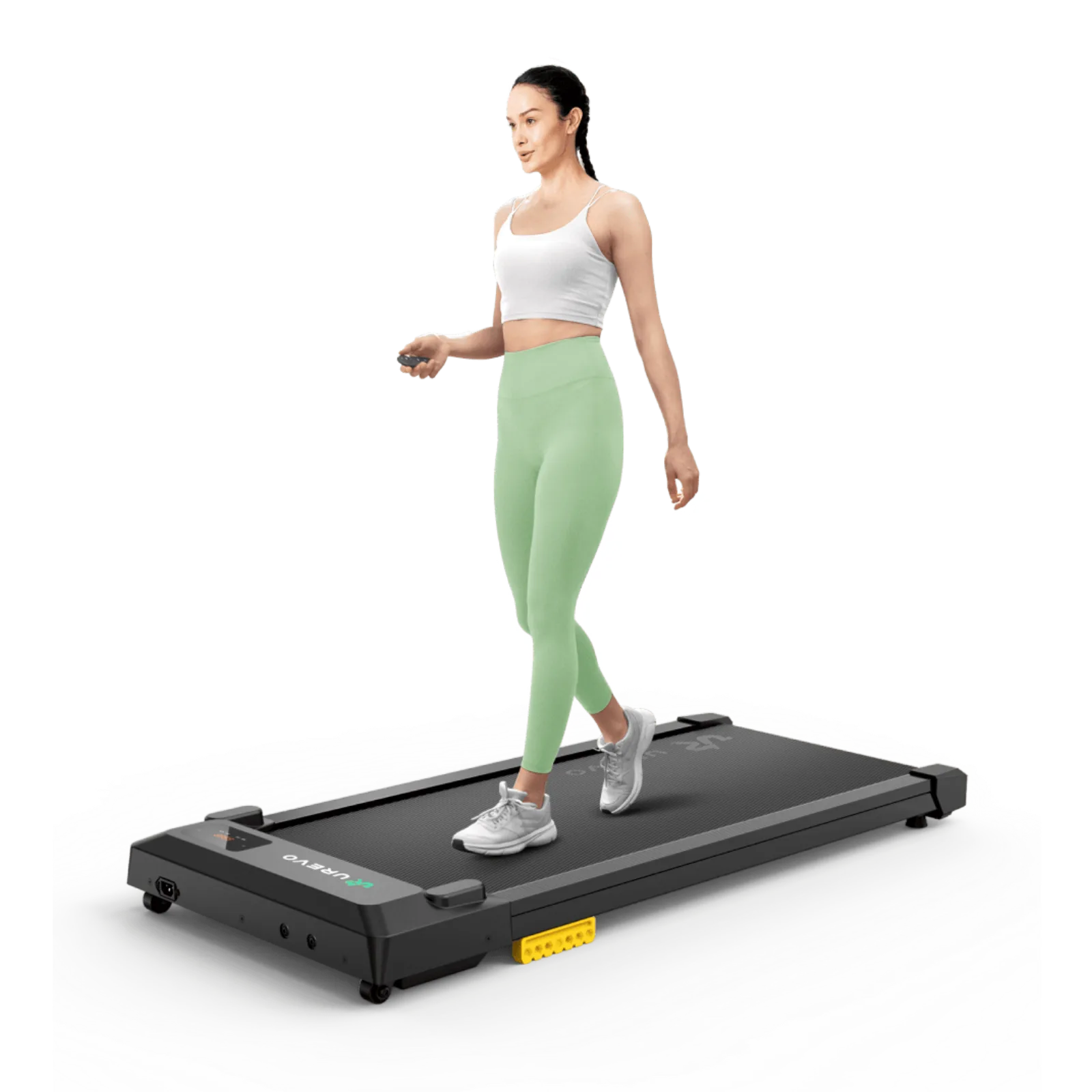
Shortlist by both 15–17.3-inch belt width and stored footprint, then check floor vibration, finished desk height, capacity, and returns.
Apartment workers comparing exact storage routes, belt widths, weights, and start speeds before ordering.
Floor-borne noise and comfortable desk height are room-specific; this page does not claim hands-on noise or comfort testing.
Our take is based on published specifications and linked sources. We have not hands-on tested these products. Some links may earn a commission.
Buying links, offers & research notes Expand
A closer look
Check the storage state before the model name
Folded footprint, walking room, and starting speed answer different apartment constraints. Confirm the exact variant and current fit details on the manufacturer page.
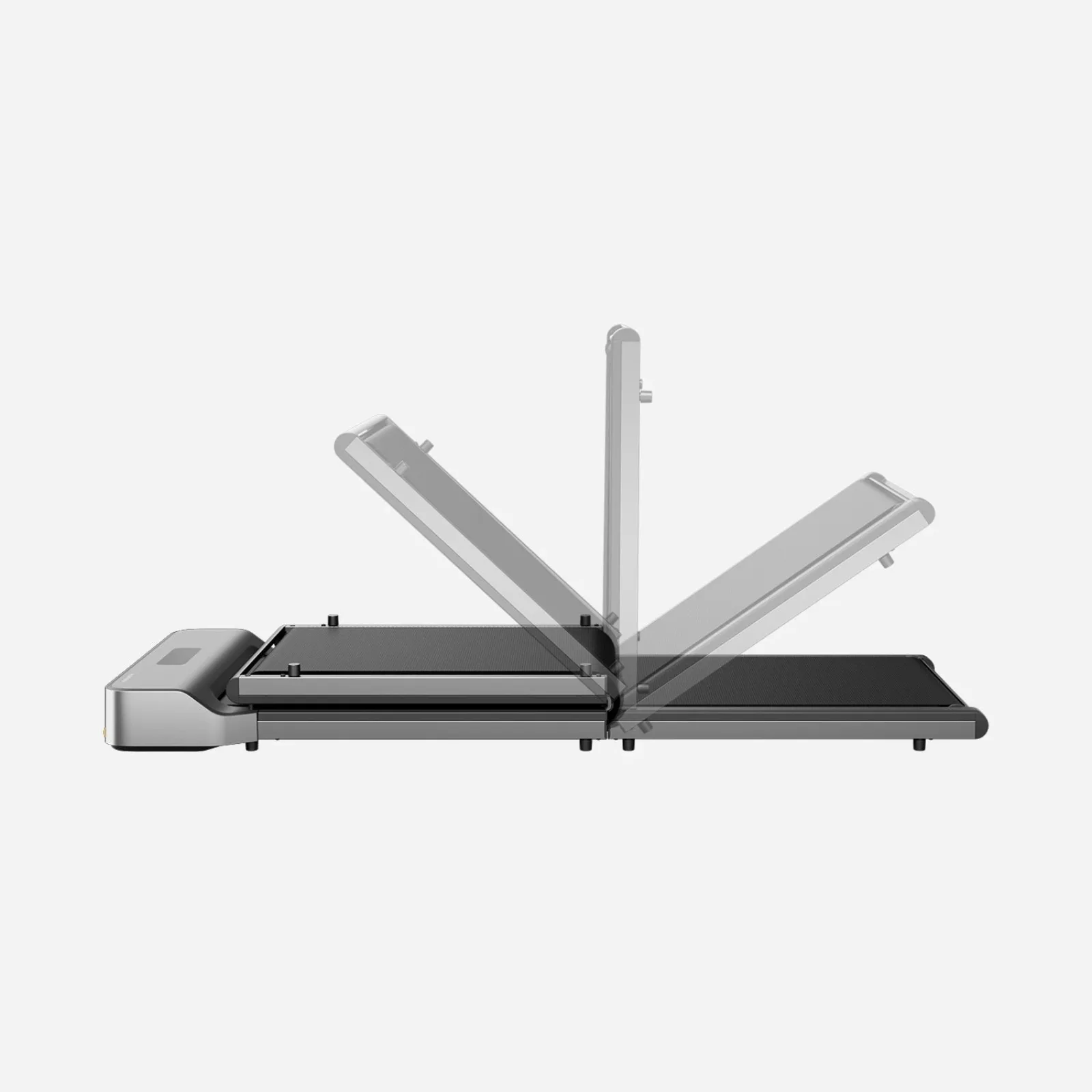 Photo: manufacturer
WalkingPad Z1
WalkingPad
Folded footprint
31.8 × 22 × 5.4 in
Official specs checked September 3, 2026
See current price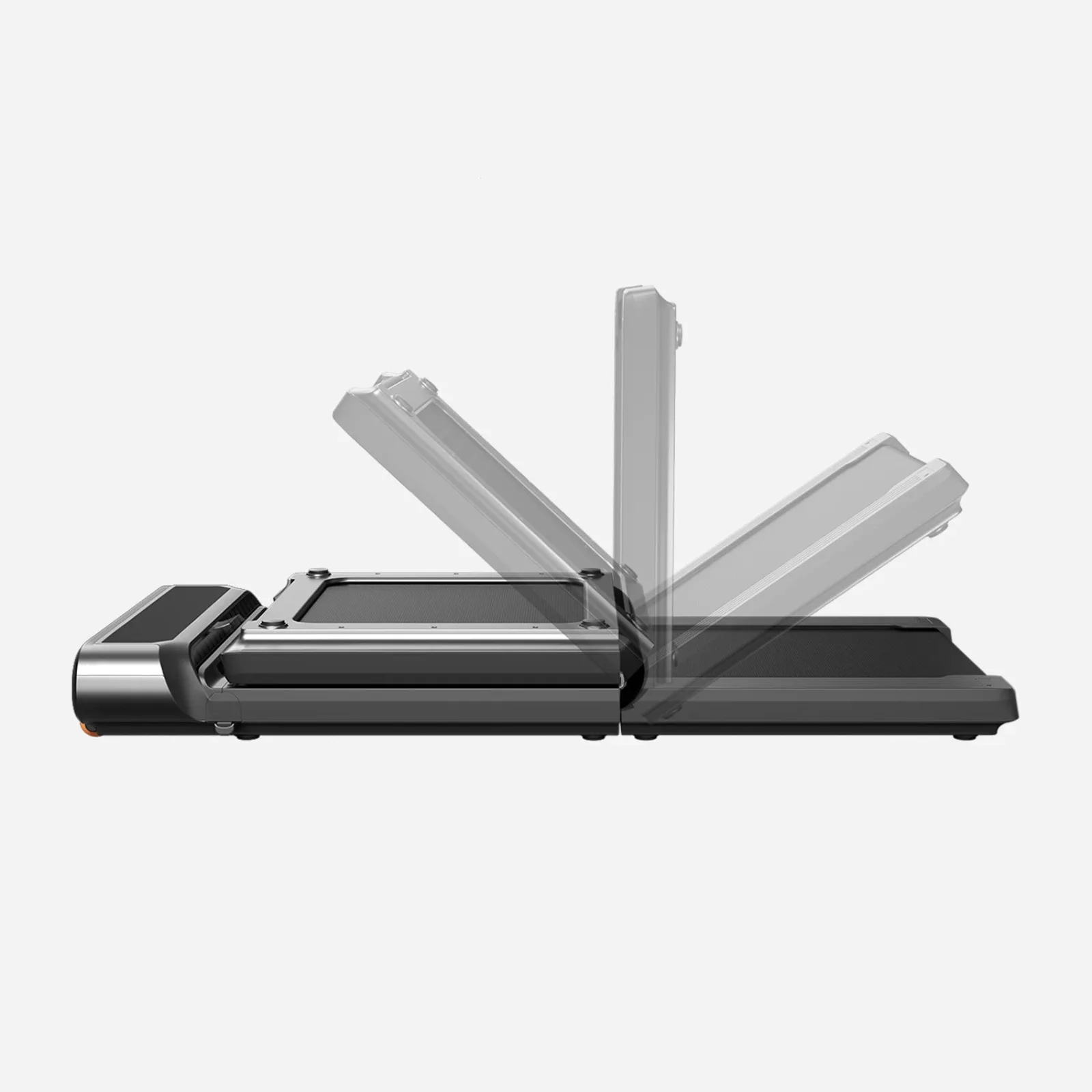 Photo: manufacturer
WalkingPad R3
WalkingPad
Walking area
47.2 × 17.3 in
Official specs checked September 3, 2026
See current price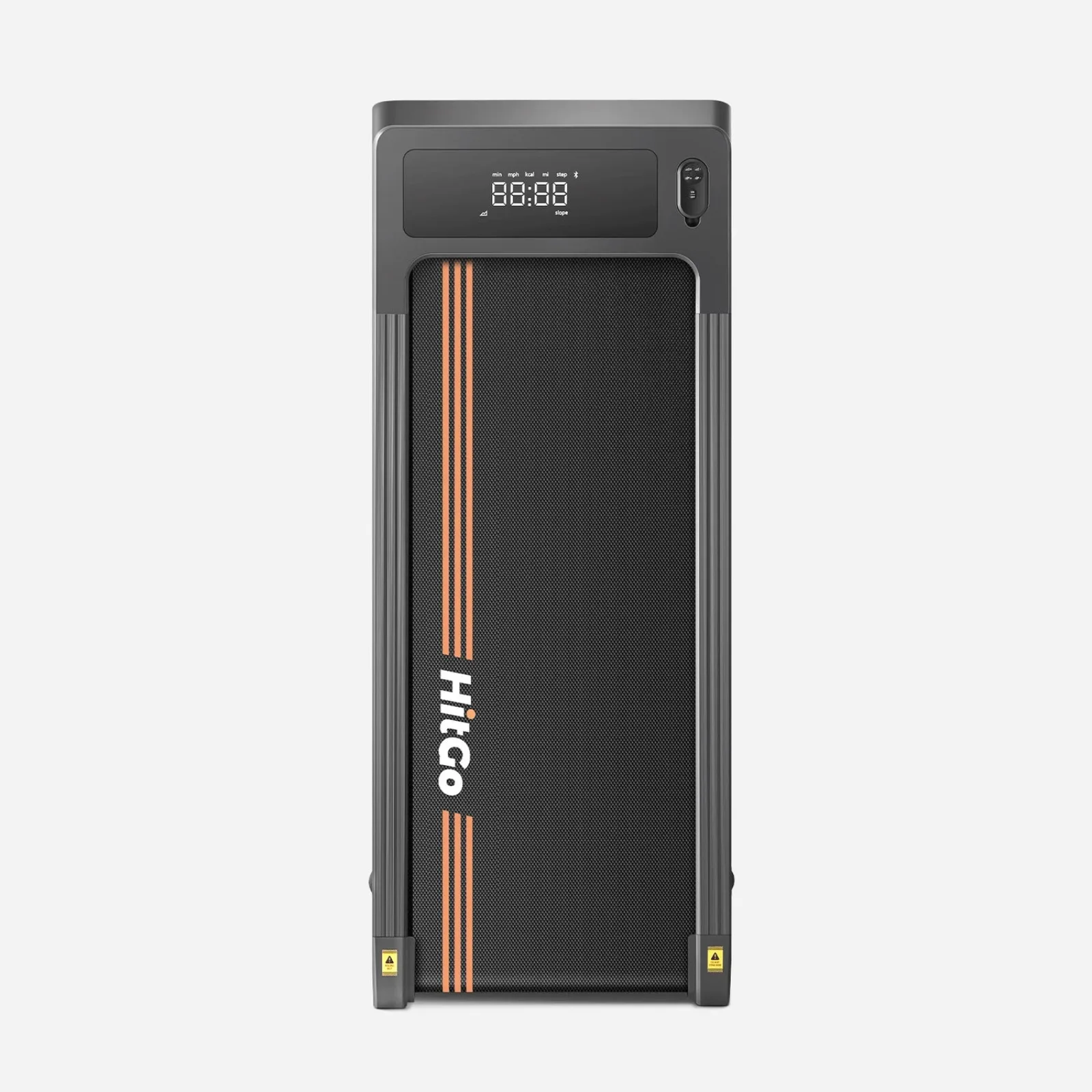 Photo: manufacturer
WalkingPad H1 Plus
WalkingPad
Starting speed
0.5 mph minimum
Official specs checked September 3, 2026
See current price1. Measure the live footprint
The body must clear the desk legs; the belt must leave you a usable walking line.
2. Measure the storage route
A folded dimension is useful only if the door, corner, opening, and lifting path also work.
3. Protect room circulation
Keep the step-off route, outlet, cable, desk travel, and everyday furniture usable together.
Start with the room, not the model name
Write down your opening, route, outlet, and desk-zone dimensions before a “compact” label makes the decision for you.
First principles
Five dimensions decide whether the pad belongs in your apartment.
Treat the apartment as a system with a working state and a stored state. A model must pass both states, plus the transition between them, or it becomes furniture you avoid using.
Unfolded length
Desk position, front/rear clearance, and the straight line your feet need.
Unfolded width
Desk-leg spacing, side edges, and the space you need to step on and off.
Stored height
The opening under a bed or sofa; do not substitute deck height for folded height.
Move weight
The product weight plus the route, doors, turns, and whether wheels help on your floor.
Power route
The compatible receptacle, cable length, inlet position, and desk-travel slack.
Manufacturer specs, side by side
Four models, four different space trade-offs
Unfolded values are length × width × height. “Unknown” means the current official page does not publish the value; it is not an estimate.
| Model | Unfolded footprint | Folded / stored | Walking area | Weight / load | Speed | Wheels / outlet |
|---|---|---|---|---|---|---|
| WalkingPad Z1 | 56.1 × 22 × 4.1 in | 31.8 × 22 × 5.4 in | 47.6 × 15.7 in | 51 lb net 242 lb max | 1–4 mph | Transport wheels listed US version: 110V. Cord length and power-inlet side are not published on the current US page. |
| WalkingPad R3 | 57.8 × 26.5 × 6.1 in | 33.5 × 26.5 × 7.5 in | 47.2 × 17.3 in | 66.3 lb net 330 lb / 265 lb, selected variant max | 1–4 mph | Integrated wheels listed US version: 110V. Cord length and power-inlet side are not published on the current US page. |
| WalkingPad H1 Plus | 50 × 21 × 6.1 in | Unknown — current US spec lists “Foldable: N/A” | 39.4 × 15.4 in | 51 lb net 243 lb max | 0.5–4 mph | Built-in wheels listed US version: 110V. Cord length and power-inlet side are not published on the current US page. |
| UREVO SpaceWalk E1L | 42.1 × 19.3 × 4.2 in | Unknown — no fold dimension published | 35.43 × 15 in | 36.59 lb 265 lb max | 0.6–4.0 mph | Transport wheels listed Unknown on the current US product page; a power cord is listed in the box. Check the manual and product label before purchase. |
Source boundary: body dimensions are not belt dimensions. The R3 page lists two load variants. The H1 Plus current US spec lists “Foldable: N/A,” and the E1L page does not publish a fold dimension. Recheck the exact variant and manual before ordering.
Model-by-model fit reads
Why consider it. Why skip it.
There is no universal winner when the room is the constraint. Use the “consider” and “skip” boundary to decide which measurement deserves your attention next.
WalkingPad Z1
56.1 × 22 × 4.1 in unfolded
- Unfolded
- 56.1 × 22 × 4.1 in
- Folded / stored
- 31.8 × 22 × 5.4 in
- Walking area
- 47.6 × 15.7 in
- Weight / max load
- 51 lb net / 242 lb
- Speed range
- 1–4 mph
- Wheels / overall body height
- Transport wheels listed · 4.1 in
Why consider it
The Z1 has the thinnest published folded profile here (5.4 inches) and a long 47.6-inch walking area. It is the clearest fit when a low storage opening and a folding deck are non-negotiable.
Why skip it
Its 22-inch body still needs a route wider than the folded thickness, and the 1 mph minimum is not the slowest in this group. Do not treat the transport wheels as proof that unsupported vertical storage is approved.
Storage read: Folds in half; the official page says under a bed or sofa. Vertical-storage approval is not stated in the page text.
Outlet read: US version: 110V. Cord length and power-inlet side are not published on the current US page.
Evidence note: Official US product specs list the dimensions, walking area, 242-lb maximum user weight, 51-lb net weight, 1–4 mph speed range, foldable design, transport wheels, and 110V US version.
WalkingPad R3
57.8 × 26.5 × 6.1 in unfolded
- Unfolded
- 57.8 × 26.5 × 6.1 in
- Folded / stored
- 33.5 × 26.5 × 7.5 in
- Walking area
- 47.2 × 17.3 in
- Weight / max load
- 66.3 lb net / 330 lb / 265 lb, selected variant
- Speed range
- 1–4 mph
- Wheels / overall body height
- Integrated wheels listed · 6.1 in
Why consider it
The R3 publishes the widest walking area in this comparison (17.3 inches) while retaining a folded deck. That extra belt width can matter when a narrower pad makes your walking line feel constrained.
Why skip it
It has the largest published folded width and height among the two models here with published folded dimensions, and at 66.3 pounds it is the heaviest of the four. Confirm whether your chosen capacity variant is the one actually in the cart.
Storage read: Folds in half; the official page says under a bed or sofa and shows upright repositioning. Approved unattended vertical storage is not stated in the page text.
Outlet read: US version: 110V. Cord length and power-inlet side are not published on the current US page.
Evidence note: Official US product specs list the dimensions, 47.2 × 17.3-inch walking area, 330-lb / 265-lb variant capacities, 66.3-lb net weight, 1–4 mph speed range, foldable design, integrated wheels, and 110V voltage.
WalkingPad H1 Plus
50 × 21 × 6.1 in unfolded
- Unfolded
- 50 × 21 × 6.1 in
- Folded / stored
- Unknown — current US spec lists “Foldable: N/A”
- Walking area
- 39.4 × 15.4 in
- Weight / max load
- 51 lb net / 243 lb
- Speed range
- 0.5–4 mph
- Wheels / overall body height
- Built-in wheels listed · 6.1 in
Why consider it
The H1 Plus starts at 0.5 mph and adds nine levels of auto incline. If low-speed control and occasional incline work matter more than flat storage, its 21-inch body can fit a tighter desk zone than the R3.
Why skip it
The page lists a 6.1-inch overall product height, not the exact belt-surface height used in a finished desk calculation, and gives no folded footprint. Measure both the standing surface and storage location before buying a 51-pound, non-fold-dimensioned machine.
Storage read: Built-in wheels are listed, but no folded dimension or approved under-bed/vertical storage position is published on the current US page.
Outlet read: US version: 110V. Cord length and power-inlet side are not published on the current US page.
Evidence note: Official US product specs list the dimensions, 15.4 × 39.4-inch walking area, 243-lb maximum user weight, 51-lb net weight, 0.5–4 mph speed range, nine levels of auto incline, built-in wheels, and 110V US version. Foldable is listed as N/A.
UREVO SpaceWalk E1L
42.1 × 19.3 × 4.2 in unfolded
- Unfolded
- 42.1 × 19.3 × 4.2 in
- Folded / stored
- Unknown — no fold dimension published
- Walking area
- 35.43 × 15 in
- Weight / max load
- 36.59 lb / 265 lb
- Speed range
- 0.6–4.0 mph
- Wheels / overall body height
- Transport wheels listed · 4.2 in
Why consider it
At 36.59 pounds and 19.3 inches wide, the E1L is the easiest of these four to move through a flexible apartment. Its 4.2-inch height and 0.6 mph minimum also leave useful room for a compact, low-speed setup.
Why skip it
The 35.43-inch walking area is much shorter than the WalkingPad options, and the missing fold dimension makes storage planning less certain. Measure both the furniture opening and the turn into it instead of assuming “low profile” means “fits.”
Storage read: The official FAQ says its 4.2-inch profile can fit under a bed or sofa with sufficient clearance. No fold or vertical-storage claim is published.
Outlet read: Unknown on the current US product page; a power cord is listed in the box. Check the manual and product label before purchase.
Evidence note: The current UREVO US product page lists the dimensions, 35.43 × 15-inch walking area, 36.59-lb product weight, 265-lb maximum load, 0.6–4.0 mph range, transport wheels in the FAQ, and a power cord/user manual in the box.
Stored state
Folded is a dimension. Vertical is a separate claim.
A product can fold without the manufacturer approving every storage orientation. Wheels are useful for repositioning; they are not a substitute for a manual’s storage instructions or a support mechanism.
| Model | Under-bed / sofa evidence | Wheels | Vertical-storage evidence | What to measure |
|---|---|---|---|---|
| WalkingPad Z1 | Official page says fold in half and slide under a bed or sofa. | Transport wheels listed. | Unknown approval; page text does not state an unattended vertical position. | 31.8 × 22 × 5.4 in opening plus the rolling route. |
| WalkingPad R3 | Official page says fold in half and slide under a bed or sofa. | Integrated wheels listed. | Unknown approval; page text shows upright repositioning but does not state a storage rule. | 33.5 × 26.5 × 7.5 in opening plus the rolling route. |
| WalkingPad H1 Plus | Unknown; no folded dimension or under-furniture position published on the current US page. | Built-in wheels listed. | Unknown; current US spec lists “Foldable: N/A.” | 50 × 21 × 6.1 in working footprint and a storage plan for a 51-lb unit. |
| UREVO SpaceWalk E1L | Official FAQ says 4.2-inch profile can fit under furniture with sufficient clearance. | Transport wheels listed. | Unknown; no fold or vertical-storage claim published. | 42.1 × 19.3 × 4.2 in route and the furniture opening. |
Outlet + circulation
The cable is part of the footprint.
A pad can fit between the desk legs and still fail the room if the cord crosses a step-off path or gets pinched when the desk moves. Draw the power route before you commit the floor space.
Room circulation check
- Mark the front and rear step-off route before placing the desk.
- Check doors, drawers, chair movement, and the path to storage.
- Re-measure after adding a mat, riser, or cable tray.
Power route check
- Match the exact model’s voltage and plug to the receptacle.
- Keep the cord outside the belt and step-off path.
- Leave slack for desk travel without creating a loop underfoot.
Print or copy
A room worksheet you can take to the tape measure.
Use the same unit system throughout. Click inside the sheet, press Cmd/Ctrl+A, and copy it into notes—or print this page from your browser. “Unknown” is a valid result; it tells you what to ask the manufacturer next.
Check desk clearanceThis sheet is intentionally plain so it remains legible when printed. Manufacturer manuals control the exact electrical, clearance, load, and storage instructions.
Decision shortcuts
Choose the constraint you cannot change.
Lowest move weight
Start with the E1L at 36.59 lb and transport wheels, then validate the short 35.43-inch walking area and unknown fold dimension.
Read the model boundaryFolding + low stored height
Start with the Z1’s published 31.8 × 22 × 5.4-inch folded size and under-bed/sofa claim; measure the 22-inch width and route.
Read the model boundaryWidest belt
Start with the R3’s 47.2 × 17.3-inch walking area, then see whether 26.5 inches wide and 66.3 pounds work in your apartment.
Read the model boundaryLowest starting pace
Start with the H1 Plus at 0.5 mph, but measure its true belt-surface height instead of substituting the listed 6.1-inch body profile, then solve the unknown storage footprint.
Read the model boundaryKeep researching the system
The next page depends on the question you still have.
Under-desk work setup
Start with the complete desk, pad, room, and workflow system.
Read nextMain walking-pad guide
Compare walking area, deck height, storage, and daily desk fit.
Read nextWalking-pad comparison chart
Filter current models by footprint, belt, load, speed, and storage constraints.
Read nextApartment noise guide
If sound is your actual question, separate it from this physical-fit page.
Read nextDesk-clearance tool
Calculate the finished keyboard-height range with the pad in place.
Read nextSetup guide
Place the pad, route cables, tune the workstation, and test it.
Read nextRemote-control guide
Compare start, stop, speed changes, pairing, and fallback controls.
Read nextCarpet compatibility
Check whether the exact manual permits your floor or mat before placement.
Read nextWalking-pad safety checklist
Review the model manual, controls, clearances, and step-off route.
Read nextApartment walking-pad questions
What should I measure before buying a walking pad for an apartment?
Measure the unfolded length and width, the deck height, the clear step-off route, the storage opening, the path to that opening, and the outlet-to-power-inlet route. Belt dimensions and outer-body dimensions solve different problems, so record both when the manufacturer publishes them.
Is a walking pad that folds automatically better for a small apartment?
Only if the folded dimensions fit the storage opening and you can move the folded machine there. A folding hinge can reduce length while leaving width, thickness, and weight unchanged. The H1 Plus and E1L have no published folded dimension on their current product pages, so their storage fit remains unknown.
Can I store a walking pad under a bed or sofa?
The Z1 and R3 pages explicitly describe under-bed or under-sofa storage, and the E1L FAQ says its 4.2-inch profile can fit under furniture with sufficient clearance. Measure the opening and the route, then follow the model manual. Do not assume the H1 Plus fits under furniture because its deck is 6.1 inches high or because it has wheels.
Can I store a walking pad vertically?
Not from the presence of wheels alone. Check the current manual and product page for the approved storage position, folded dimensions, locking or support mechanism, and safety instructions. For this comparison, vertical-storage approval is not stated in the product-page text for any model.
How much room should I leave around a walking pad?
Use the exact model manual for required clearances. As a planning matter, keep the belt, side edges, front, rear, controls, and power cable clear enough for the manufacturer’s instructions and for an unobstructed step-off route. There is no single apartment-wide clearance number that fits every model and room.
What outlet does a walking pad need?
Match the receptacle to the exact model’s rated voltage and plug requirements, and follow the manual’s cord guidance. The current US WalkingPad pages list 110V for the Z1, R3, and H1 Plus. The current UREVO E1L page lists a power cord but does not publish voltage, so that item is unknown until you check its manual or product label.
Which apartment walking pad is easiest to move?
By published product weight, the UREVO SpaceWalk E1L is lightest at 36.59 pounds and lists transport wheels. The Z1 is 51 pounds and the H1 Plus is 51 pounds; the R3 is 66.3 pounds. That ranking does not answer whether the folded or unfolded route fits your doors and corners.