Walking while working
WalkingPad X218 vs X25+: exact US models compared
These larger WalkingPad models deserve a room-and-routine decision, not a quick number chase. Compare the exact US belt, speed, storage, and use range before planning the machine’s permanent and folded homes before arranging the room.
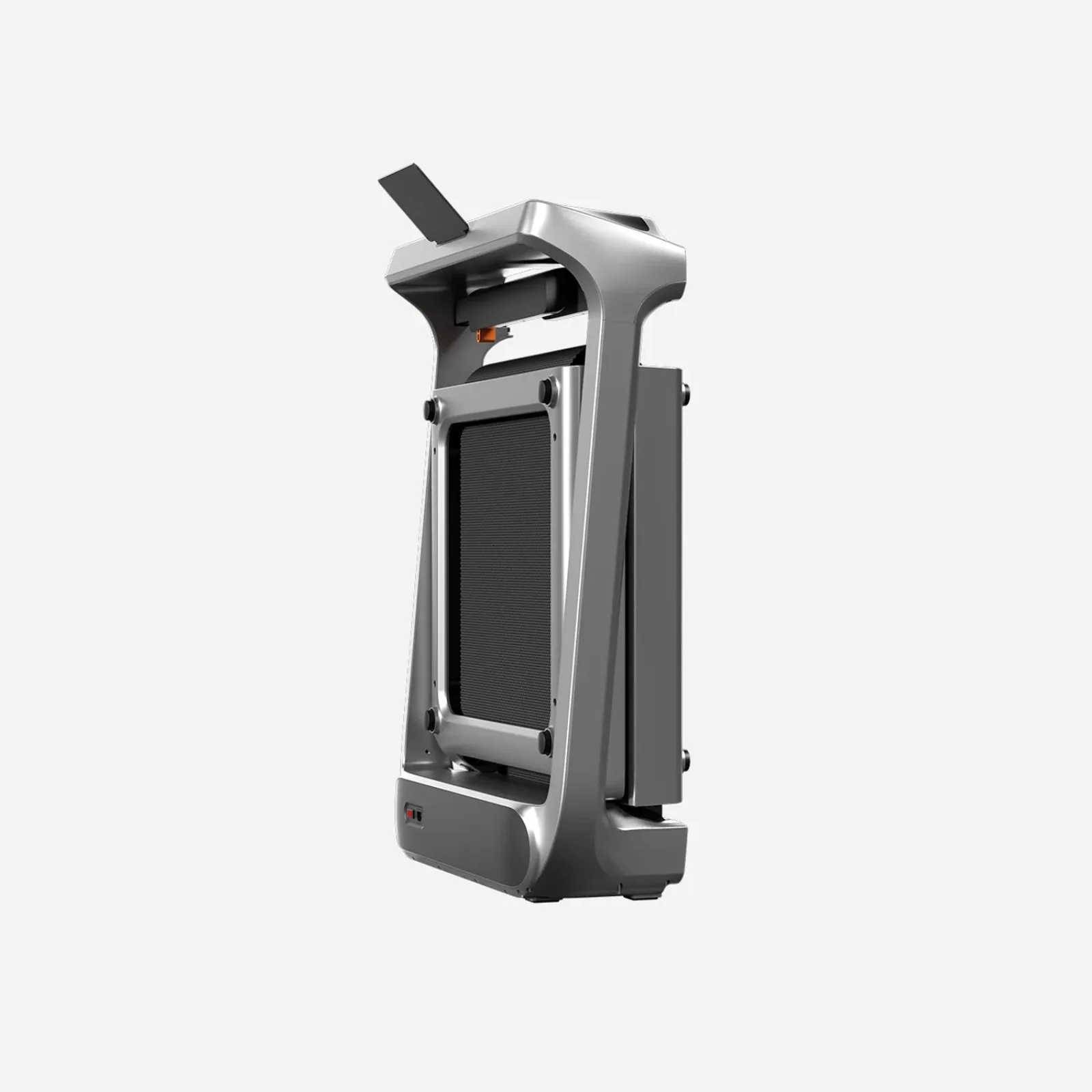
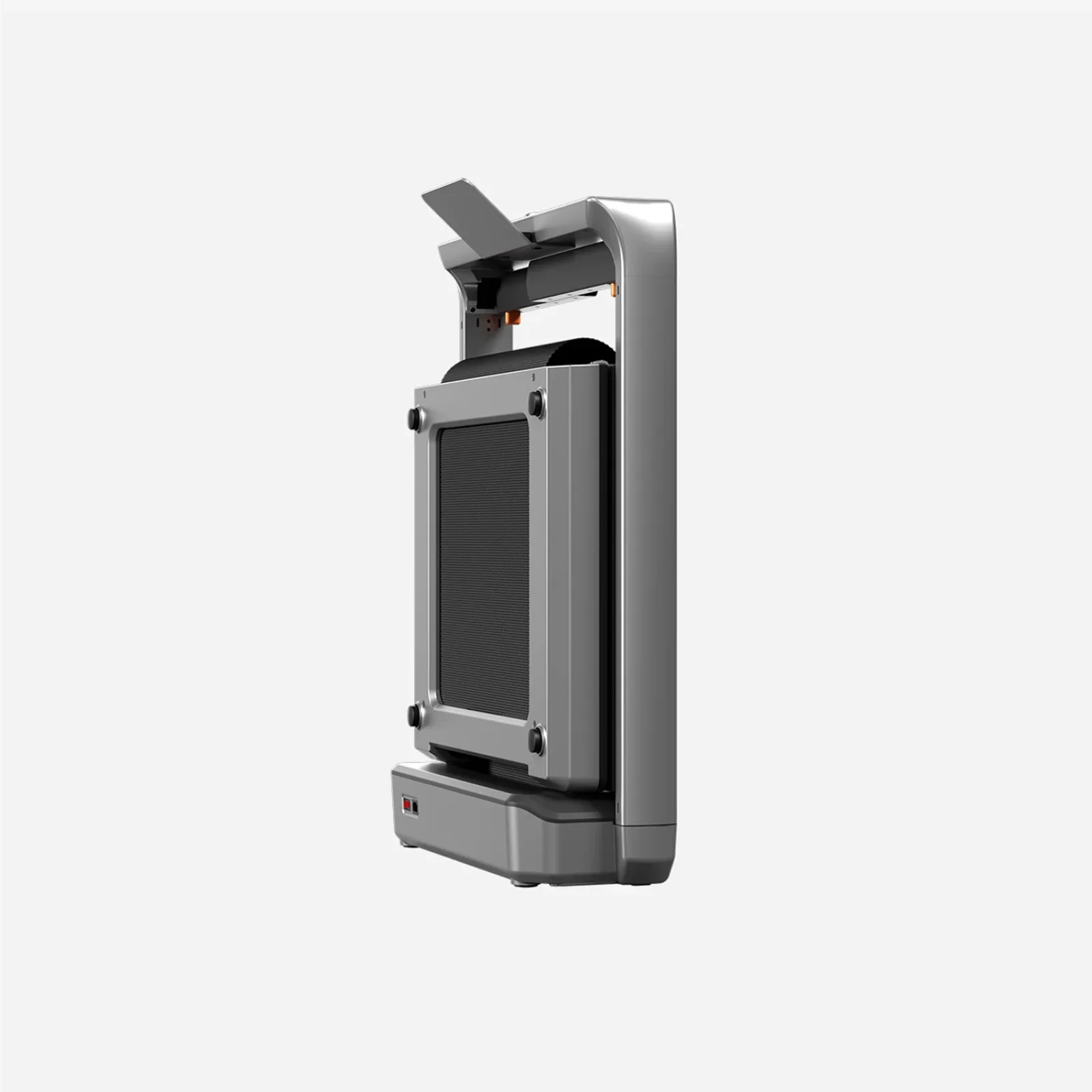
Choose X218 for 55.1×20-inch belt and 11.5 mph; choose X25+ for 119-lb net, 10 mph, and foldable side rails.
X218 fits maximum deck and speed; X25+ fits users valuing side rails and lower listed weight.
Both are running treadmills with 300-lb listings; neither page establishes desk walking or easy storage.
Our take is based on published specifications and linked sources. We have not hands-on tested these products. Some links may earn a commission.
Buying links, offers & research notes Expand
Need more running room?
X218 lists 55.1 × 20 inches versus X25+ at 51.9 × 19.6 inches. Use your natural stride and room measurements before treating that as a fit verdict.
Need the higher ceiling?
X218 lists 1–11.5 mph; X25+ lists 1–10 mph. The published range describes the product, not the pace you should use.
Need the lighter machine?
X25+ lists 119 lb net versus X218 at 129 lb net. Include stairs, turns, thresholds, and final storage in the moving decision.
Short verdict
Pick X218 for running envelope and speed. Pick X25+ for foldable side rails and a lower listed net weight. If your purchase is for desk work, check the actual desk geometry first.
WalkingPad X218 vs X25+ specs
Compare the constraints that survive a real-room check.
Values below come from the current US product materials and WalkingPad’s official comparison/FAQ pages. Price and stock are omitted because they change. Recheck the selected model, regional page, and package contents before ordering.
| Decision factor | WalkingPad X218 | WalkingPad X25+ | What it means |
|---|---|---|---|
| Exact model and US variant | WalkingPad X218 Foldable Treadmill | 11.5 MPH — current US page | WalkingPad X25+ Folding Treadmill | 10MPH — current US page | These are separate products. X25 (X216), X214, X21, MX16, and MX16+ are not interchangeable rows or aliases. |
| Speed range | 1–11.5 mph | 1–10 mph | X218 has the higher published ceiling. The range does not establish a recommended pace, training plan, or desk-work speed. |
| Published running area | 55.1 × 20 in | 51.9 × 19.6 in | X218 lists 3.2 inches more length and 0.4 inch more width. Published area is not a universal stride, comfort, or room-fit verdict. |
| Stated maximum user capacity | 300 lb | 300 lb | Both current product materials publish 300 lb. Treat a manufacturer maximum as a ceiling, not a suggested operating target, and verify the exact selected US option. |
| Net machine weight | 129 lb net | 119 lb net in official option/FAQ information | X218 is listed 10 lb heavier net. Include stairs, turns, thresholds, rollers, and the final storage position in the moving plan. |
| Controls | WalkingPad app + SpeedDial™; no remote listed | KS Fit app + SpeedDial™; no remote listed | Both rely on an app and a physical dial in the reviewed US materials. Neither listing establishes a hands-free under-desk control mode. |
| Handrails | Side handrails; quick-release/folding hardware described | Foldable side handrails listed | Both have rail hardware that can affect a desk, camera, or monitor path. Measure the raised and folded positions instead of assuming either disappears from the workspace. |
| Folded outside dimensions | 42.5 × 33 × 11.6 in (page-listed order) | 9.6 × 30.4 × 41.5 in (page description; verify orientation) | The pages present different dimension orders and orientations. Compare the actual storage posture and route, not just the first number in each listing. |
| Unfolded outside dimensions | 63.7 × 33 × 42.5 in (page-listed order) | Separate unfolded dimension row not clearly provided on the reviewed X25+ page | Do not copy the X25 dimensions into X25+. Recheck the selected US page, product label, and manual before designing a room around the machine. |
| Folding and storage description | Vertical-fold technology; compact folded profile described | Double-fold frame; folded profile described | A fold claim does not guarantee under-bed, closet, or upright storage. Measure the storage position, turning radius, clearance, and lifting/rolling space. |
| Desk-use boundary | Running treadmill listing; no remote listed | Running treadmill listing; no remote listed | Neither page labels a dedicated under-desk walking mode. Desk compatibility must be checked from the actual belt/rail geometry and your desk’s usable height. |
WalkingPad X218
Higher-speed foldable running treadmill with a larger listed belt
Exact variant: Current US WalkingPad X218 Foldable Treadmill | 11.5 MPH listing. Do not substitute X214, X21, X25, X25+, MX16, or another regional listing.
The current US X218 page lists a 55.1 × 20-inch running area, 1–11.5 mph, 300 lb capacity, and 129 lb net weight. It is the performance-first choice in this pair when the larger published running envelope matters more than moving the machine often.
Skip X218 if storage depth, lifting weight, or a smaller room is the hard constraint. Its listed 129 lb net weight and 42.5 × 33 × 11.6-inch folded envelope need a real route and storage check; the page does not prove that it will fit under a particular bed, desk, or wall.
- Speed range
- 1–11.5 mph
- Running area
- 55.1 × 20 in
- Stated capacity
- 300 lb
- Net weight
- 129 lb net
- Controls
- WalkingPad app + SpeedDial™; no remote listed
- Handrails
- Side handrails with quick-release/folding hardware described on the product page
- Folded outside size
- 42.5 × 33 × 11.6 in (page-listed order)
- Unfolded outside size
- 63.7 × 33 × 42.5 in (page-listed order)
- Storage
- Vertical-fold design; the page describes a compact folded profile
- Setup listing
- The current product listing presents a fully assembled treadmill; verify the delivered US option and manual
Source read: The current US product page lists 1–11.5 mph, a 55.1 × 20-inch running area, 300 lb capacity, 129 lb net weight, App plus SpeedDial control, side handrails, and the folded and unfolded dimensions shown here.
WalkingPad X25+
Double-fold running treadmill with foldable side handrails
Exact variant: Current US WalkingPad X25+ Folding Treadmill | 10MPH listing. X25+ is a separate product from X25 (X216); do not merge its side rails, weight, or folded dimensions into the X25 row.
The current X25+ page and WalkingPad’s official comparison/FAQ materials list a 51.9 × 19.6-inch running area, 1–10 mph, 300 lb capacity, foldable side handrails, and 119 lb net weight. It is the more compact performance choice on the published weight and speed limits, provided the side rails and storage orientation work in your room.
Skip X25+ if you need the X218’s 11.5-mph ceiling or its longer, wider listed running area. Also skip it if you expect a low-profile desk treadmill: the listing is for a running treadmill, and a low speed or folding frame does not establish desk clearance or hands-free control.
- Speed range
- 1–10 mph
- Running area
- 51.9 × 19.6 in
- Stated capacity
- 300 lb
- Net weight
- 119 lb net in the official FAQ/option information
- Controls
- KS Fit app + SpeedDial™; no remote listed
- Handrails
- Foldable side handrails listed; X25 is a separate no-side-rail option
- Folded outside size
- 9.6 × 30.4 × 41.5 in (page description; verify orientation)
- Unfolded outside size
- The reviewed X25+ page does not provide a separate, clearly labeled unfolded dimension row; do not silently borrow X25 dimensions
- Storage
- Double-fold frame; measure the intended upright or flat storage position
- Setup listing
- The current product listing describes the double-fold frame; confirm the delivered US option and assembly instructions
Source read: The current US X25+ product page describes a 1–10 mph double-fold treadmill with a 300 lb capacity, foldable side handrails, a 9.6 × 30.4 × 41.5-inch folded description, and a 1.5HP motor claim. The page’s motor language is not used as a buying verdict here.
Fit, storage, and desk boundaries
Measure the room before you choose the model.
X218 and X25+ solve different machine-selection constraints. Neither official product page supplies the complete floor-to-belt, keyboard, monitor, rail, and storage path needed for a desk decision.
Desk fit is not outside height
The listed body dimensions are not a labeled floor-to-belt standing height. Measure the belt surface on the actual unit, add footwear and stance allowance, then compare it with the desk’s usable keyboard height and monitor path.
Rails can change the workspace
X218 has side handrails and X25+ lists foldable side handrails. A folding label does not prove that the rail is clear of your keyboard, camera, monitor arm, or chair. Check raised and folded positions.
Storage is a route problem, not just a folded number
Record the doorway, turns, thresholds, wall/closet clearance, and lifting or rolling space. The two pages use different dimension orders, so compare the actual storage posture rather than the first listed axis.
Desk controls are unproven
Both reviewed US listings rely on an app and SpeedDial and do not list a remote. A low speed does not establish a hands-free control mode or make a running treadmill keyboard-ready.
Calculate desk fit
Check floor-to-belt assumptions, keyboard height, monitor clearance, and desk range.
Map belt fit
Use your height and natural stride instead of treating a wider listed deck as a universal fit.
Compare more models
Return to the broader model chart when neither exact pair matches your hard constraint.
Read the setup guide
Separate a running-machine purchase from the measurements needed for desk work.
Who should choose or skip
Start with the task, then verify the exact model.
Choose X218 if the longer and wider listed running area, 11.5-mph ceiling, and a 300-lb published capacity are the reasons you are shopping. Skip X218 if 129 lb net weight, the larger folded envelope, or a difficult storage route is the deal-breaker.
Choose X25+ if foldable side handrails and 119 lb net weight are more useful than X218’s higher speed ceiling. Skip X25+ if you need the X218 running area or if you specifically want the separate X25 option without side handrails.
Skip both as a desk purchase until measured if your desk cannot accommodate the belt and rail geometry, or if you require a remote/feet-free control workflow that the reviewed US listings do not establish.
Continue the cluster
Best walking pads for under-desk work is the broader buying guide.
Desk-height clearance calculator checks whether your desk and machine can coexist.
WalkingPad X21 vs X25 explains why X25 is not the same product as X25+.
WalkingPad R2 vs X21 compares X21 with a different walk-and-run option.
WalkingPad X218 vs X25+ FAQ
Questions that change the choice
What is the main difference between WalkingPad X218 and X25+?
The current US X218 lists a 55.1 × 20-inch running area, 1–11.5 mph, and 129 lb net weight. The X25+ materials list a 51.9 × 19.6-inch area, 1–10 mph, foldable side handrails, and 119 lb net weight. Both publish a 300 lb capacity. X218 is the larger, faster, heavier choice on these listed specifications; X25+ is the lighter side-rail option.
Is X25+ the same as X25?
No. WalkingPad’s current US materials present X25 and X25+ as separate options. The X25 page lists no side handrails and 104 lb net weight in its technical table, while the X25+ materials describe foldable side handrails and 119 lb net weight. Do not use the X25 row as a substitute for X25+ or carry X25 dimensions into this comparison.
Which has the larger belt, X218 or X25+?
The reviewed US product materials list X218 at 55.1 × 20 inches and X25+ at 51.9 × 19.6 inches. X218 therefore has the larger published running area. That does not prove that either belt fits your natural stride, footwear, room, or desk clearance.
Is X218 faster than X25+?
Yes, on the current published ranges: X218 lists 1–11.5 mph and X25+ lists 1–10 mph. This is a specification difference, not a recommendation to use either treadmill at a particular pace.
Which one is easier to move or store?
X25+ is listed at 119 lb net, versus 129 lb net for X218. X218’s page gives a 42.5 × 33 × 11.6-inch folded listing; X25+ describes a 9.6 × 30.4 × 41.5-inch folded profile. Because the pages use different dimension orders, measure your actual storage orientation and delivery route before deciding.
Can I use X218 or X25+ under a standing desk?
Do not assume so from the speed range or the folding frame. Both are presented as running treadmills, neither reviewed US listing includes a remote, and the rail geometry can occupy the desk path. Measure floor-to-belt height, keyboard height, monitor clearance, rail position, and the desk’s usable height first. Use the WorkChoose desk-fit calculator for the measurement worksheet.
Do X218 and X25+ include a remote?
The reviewed current US product materials list app and SpeedDial control for these models and do not list a remote. Treat that as a control limitation for desk workflows; recheck the exact selected product page and package contents before ordering.
Are X218 and X25+ noise-tested on this page?
No. WorkChoose has not personally tested either machine and does not provide a matched X218-versus-X25+ noise, vibration, comfort, or durability result. Manufacturer noise language, where present, remains a manufacturer claim and is not converted into a measured conclusion.
Are these WalkingPad links affiliate links?
No. At the time of this review, both buttons go directly to the official WalkingPad US product pages and no affiliate tracking is active. If that changes, WorkChoose will update the disclosure and link attributes. Availability, specifications, and regional options can change.
Final check
Pick the constraint first. Pick the exact US model second.
X218 is the larger, faster, heavier listed choice. X25+ is the foldable-side-rail option with a lower listed net weight. Verify dimensions, rail position, controls, and the selected US variant before opening the manufacturer page.