Screens & connections
Arzopa Z3FC vs Z1FC: QHD 180Hz or FHD 144Hz?
If the Z1FC already gives you the FHD refresh and connections you need, the Z3FC earns its place through sharper detail and a higher refresh ceiling. That upgrade is easiest to notice in games and media, provided the source can feed it.
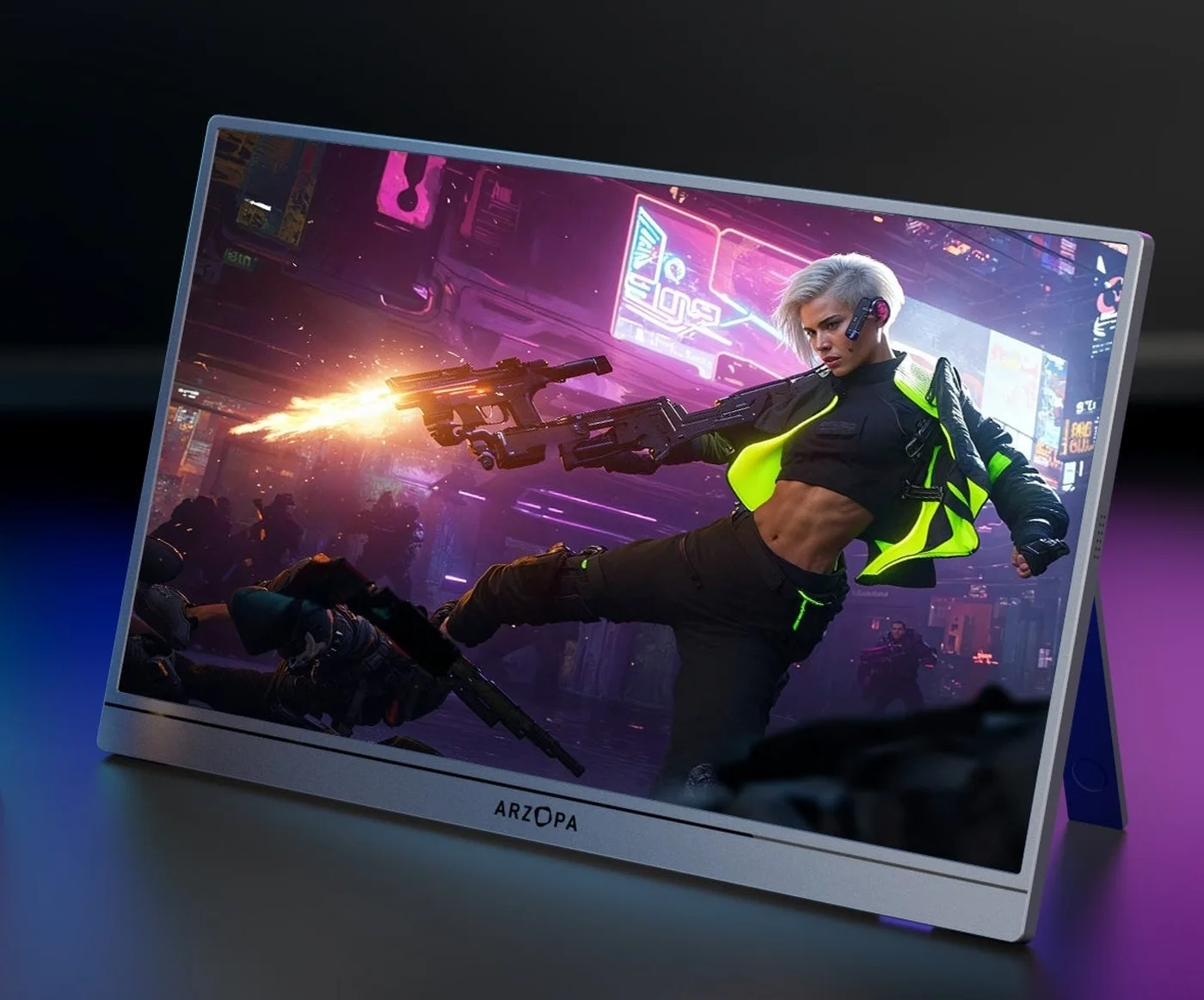
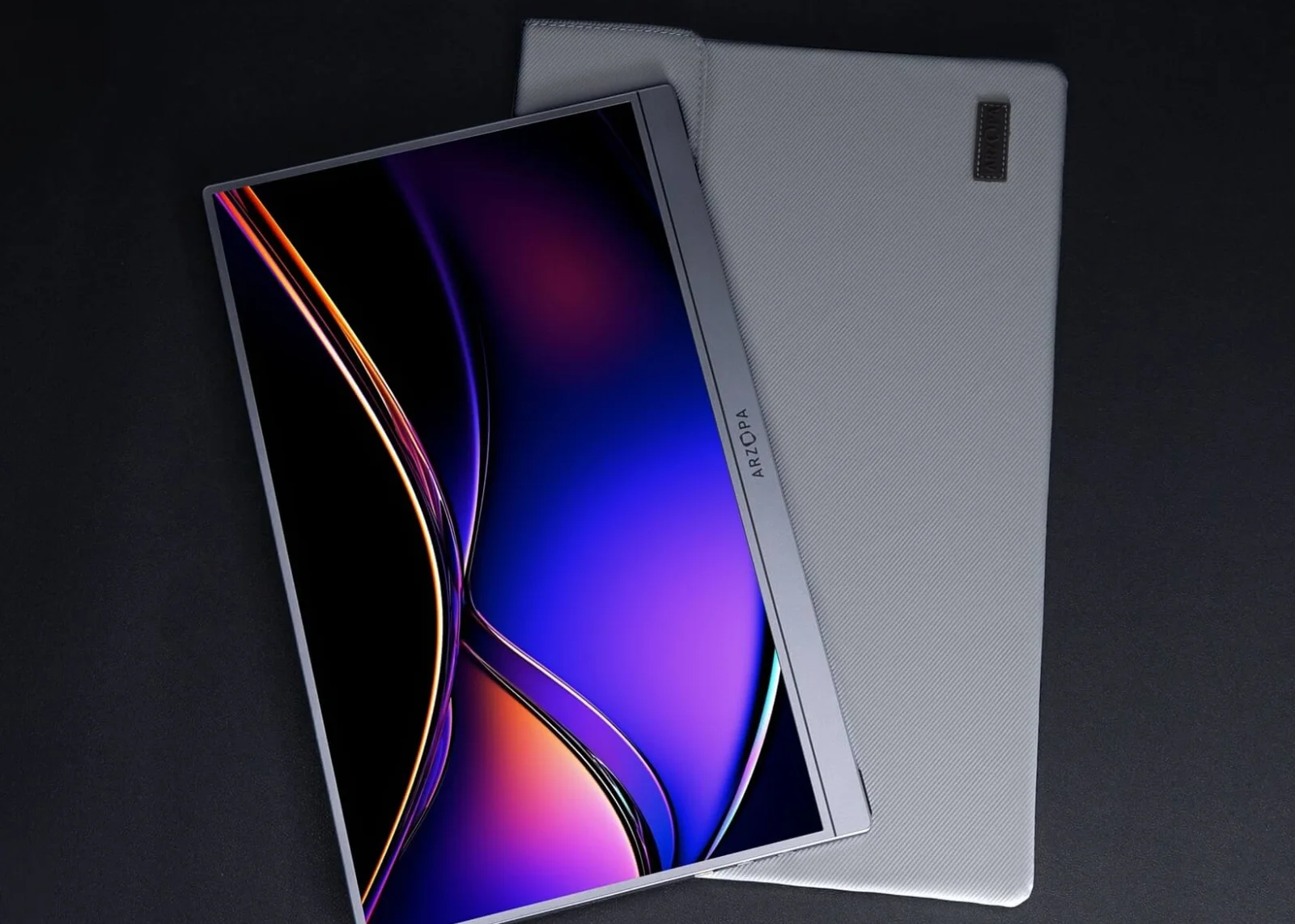
Z3FC adds QHD and a manufacturer-listed 180Hz ceiling; Z1FC keeps the simpler FHD 144Hz path.
Choose Z3FC when the source can show QHD detail; choose Z1FC for simpler FHD travel.
Higher resolution and refresh demand compatible outputs, cables, and enough power from the travel setup.
Our take is based on published specifications and linked sources. We have not hands-on tested these products. Some links may earn a commission.
Quick answer
More pixels or a lighter FHD decision?
Start with Z3FC if sharper 2.5K detail, a 180Hz target, and the higher listed brightness map to your work or gaming setup. Start with Z1FC if FHD is sufficient and 144Hz is the refresh target your host can actually expose. Both choices still require a signal and power check.
| If your priority is… | Start with… | Because… |
|---|---|---|
| Sharper text and image detail | Z3FC | Arzopa lists Z3FC at 2,560 × 1,440 while Z1FC is FHD. |
| Higher listed refresh target | Z3FC | Z3FC is listed at 180Hz; Z1FC is listed at 144Hz. |
| FHD is enough for the workflow | Z1FC | It keeps the same published 16.1-inch 16:9 canvas while targeting 144Hz. |
| Lowest connection uncertainty | Verify first | Host output, cable, adapter, monitor input, selected mode, and power all matter. |
These are fit-based recommendations from manufacturer-published figures, not independent measurements of sharpness, color, response, brightness, refresh behavior, or stand stability.
What actually differs
The display tier changes; the setup rules do not.
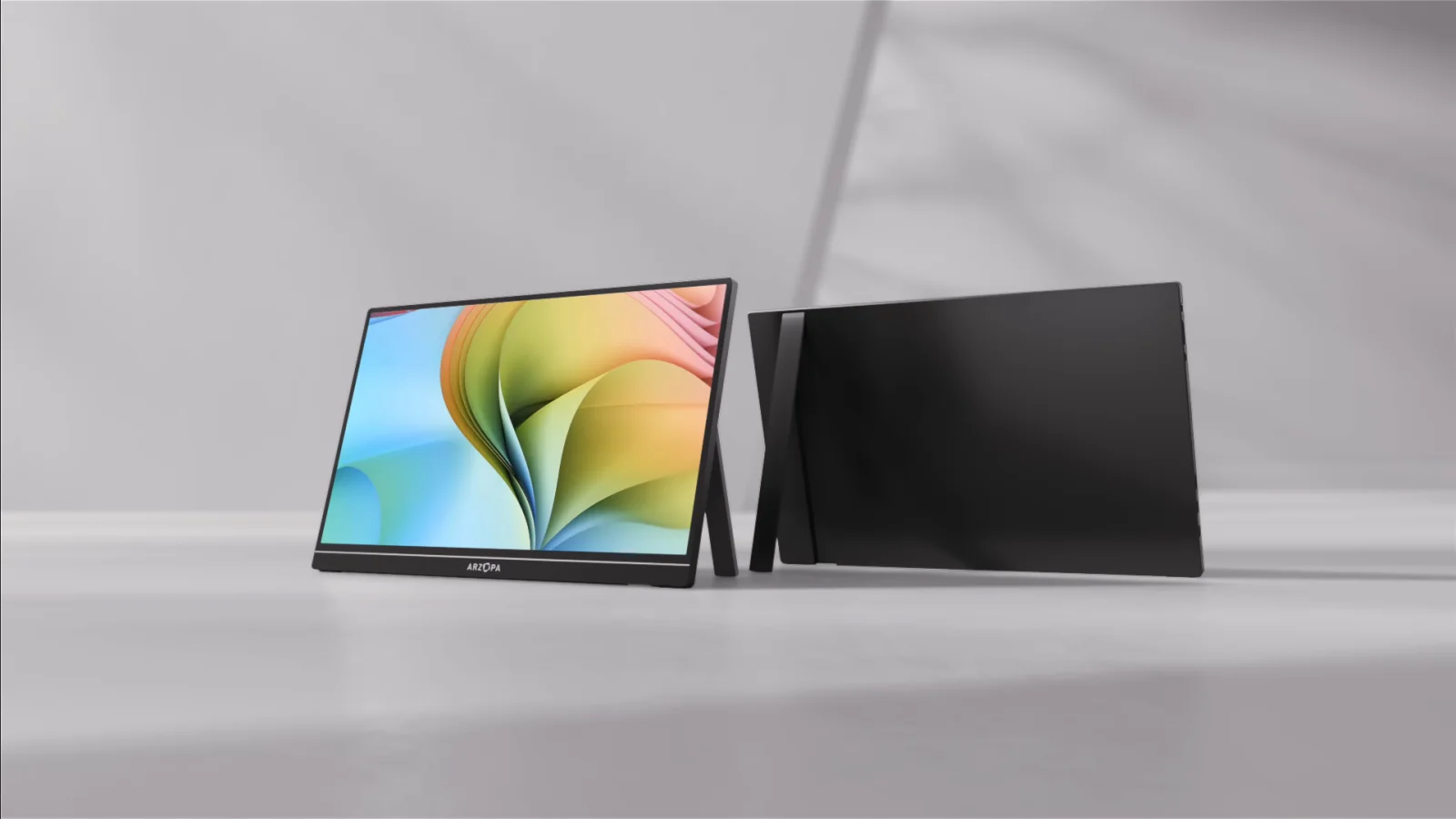
Both current Global pages list a 16.1-inch IPS 16:9 panel, a built-in stand, the same published dimensions and weight, dual USB-C, and mini HDMI. Z3FC moves to 2.5K, 180Hz, 400 nits, and 12.9W rated power; Z1FC stays at FHD, 144Hz, 300 nits, and 10W.
Resolution fork
Z3FC is listed at 2,560 × 1,440; Z1FC at 1,920 × 1,080. Both are 16:9 and 16.1 inches, so the fork is pixel detail rather than physical size.
Refresh target
Z3FC is listed at 180Hz; Z1FC at 144Hz. The source, cable, adapter, resolution, input, operating system, and app still determine the mode you see.
Brightness and labels
Arzopa lists 400 nits and 107% sRGB for Z3FC versus 300 nits and 106% sRGB for Z1FC. These are manufacturer labels, not an independent calibration test.
Power headroom
The current specification lists 12.9W for Z3FC and 10W for Z1FC. A one-cable USB-C path depends on host power; HDMI normally adds USB-C monitor power.
Signal and power
A matching connector does not guarantee a matching setup.
USB-C video
The source USB-C port must support DisplayPort video output and the cable must carry video. A charging-only port or cable can leave the monitor powered but blank.
One-cable power
Arzopa describes one-cable USB-C use when the host supports video and provides enough power. The listed rated power is 12.9W for Z3FC and 10W for Z1FC, so verify the host.
Refresh path
For either model, check the host output, cable, adapter or dock, monitor input, resolution, and operating-system mode. Do not treat 180Hz or 144Hz as a universal result on every path.
HDMI path
Use the appropriate HDMI adapter or dock, mini-HDMI cable, and separate USB-C monitor power. Arzopa’s support page identifies USB-A-to-C as power-only and mini-HDMI as signal-only.
Host compatibility boundary
“MacBook compatible” still means check the MacBook.
Arzopa lists MacBooks among compatible computers for both models. Apple's guidance says the exact Mac model, video ports, supported display count, cable, adapter, resolution, and refresh mode determine the connection. Neither monitor changes a Mac's native external-display limit.
USB-C MacBook path
Use a full-featured USB-C cable and a Mac port that carries DisplayPort video. Check the exact Mac model before expecting one cable to carry both signal and power.
HDMI MacBook path
A USB-C-to-HDMI adapter or dock can feed mini HDMI, but the monitor still needs USB-C power. Adapter, cable, macOS mode, and panel input all matter.
Two-monitor path
Two panels require two independent host display signals or a separately verified DisplayLink path. Two USB-C sockets on one monitor are not two Mac video outputs.
Exact model table
Z3FC and Z1FC, field by field.
The figures below come from the current exact Global product pages and Arzopa support guidance checked September 4, 2026. They describe published specifications; they do not promise a host mode, measured performance, or connection result.
| Model | Resolution / ratio | Refresh / brightness | Weight / size | Stand / panel | Ports / signal | Power / fit |
|---|---|---|---|---|---|---|
| Arzopa Z3FCThe sharper, higher-refresh option | 2,560 × 1,440 (2.5K QHD) 16:9 | 180Hz 400 nits 107% sRGB | 1.72 lb 366 × 228 × 9.3 mm | Built-in stand; landscape and portrait modes are described 16.1-inch IPS · 2,560 × 1,440 · 16:9 · 180Hz | 2 × USB-C 3.1 with PD/DP output shown; 1 × mini HDMI 2.0 Arzopa lists USB-C DisplayPort output and mini HDMI. A full-featured USB-C host port is required for the native USB-C path; the Global page does not publish a per-input refresh table. | 12.9W rated power is listed in the current Global specification. A one-cable USB-C setup depends on the host supplying video and enough power; HDMI normally needs separate USB-C monitor power. Arzopa lists MacBooks, Windows laptops, PCs, compatible USB-C phones and tablets, PS5, Xbox, Nintendo Switch, Steam Deck, and ROG Ally through the appropriate signal and power path. |
| Arzopa Z1FCThe FHD value-and-motion baseline | 1,920 × 1,080 (FHD) 16:9 | 144Hz 300 nits 106% sRGB | 1.72 lb 366 × 228 × 9.3 mm | Built-in stand; landscape and portrait viewing are described 16.1-inch IPS · 1,920 × 1,080 · 16:9 · 144Hz | 2 × USB-C 3.1 with PD/DP output shown; 1 × mini HDMI 2.0 Arzopa lists USB-C video/power and mini HDMI for compatible sources. A full-featured USB-C cable and a host port with video output are required for the native USB-C path. | 10W rated power is listed in the current Global specification. HDMI devices, consoles, and some low-power USB-C hosts usually need separate USB-C monitor power. Arzopa lists MacBooks, Windows laptops, desktops, compatible USB-C phones and tablets, PS5, Xbox, Nintendo Switch, Steam Deck, and ROG Ally through the appropriate signal and power path. |
Arzopa also lists aluminum construction, dual speakers, HDR10, and non-touch operation for both pages. Those fields do not decide this pair, so the table centers resolution, refresh, signal, power, and portability.
Arzopa Z3FC
The sharper, higher-refresh option
- Resolution / ratio
- 2,560 × 1,440 (2.5K QHD) · 16:9
- Refresh / brightness
- 180Hz · 400 nits
- Weight / dimensions
- 1.72 lb · 366 × 228 × 9.3 mm
- Color label
- 107% sRGB
- Stand
- Built-in stand; landscape and portrait modes are described
- Ports
- 2 × USB-C 3.1 with PD/DP output shown; 1 × mini HDMI 2.0
- Rated power
- 12.9W rated power is listed in the current Global specification. A one-cable USB-C setup depends on the host supplying video and enough power; HDMI normally needs separate USB-C monitor power.
- Included cables
- Full-featured USB-C-to-USB-C cable, USB-C charging cable, HDMI 2.0-to-mini-HDMI cable, and quick-start guide are listed on the exact page; the product presentation also shows a protective sleeve.
- Compatibility
- Arzopa lists MacBooks, Windows laptops, PCs, compatible USB-C phones and tablets, PS5, Xbox, Nintendo Switch, Steam Deck, and ROG Ally through the appropriate signal and power path.
Why choose it
Choose it when sharper text or image detail, 2.5K resolution, the listed 180Hz target, and higher listed brightness matter more than keeping the setup at the simpler FHD baseline.
Why skip it
Skip it when your host is limited to FHD, cannot expose the desired refresh mode, or you only need a basic second screen. The higher specification does not remove cable, adapter, power, or Mac display-limit checks.
Signal read
Arzopa lists USB-C DisplayPort output and mini HDMI. A full-featured USB-C host port is required for the native USB-C path; the Global page does not publish a per-input refresh table.
Power and cable note
12.9W rated power is listed in the current Global specification. A one-cable USB-C setup depends on the host supplying video and enough power; HDMI normally needs separate USB-C monitor power. Full-featured USB-C-to-USB-C cable, USB-C charging cable, HDMI 2.0-to-mini-HDMI cable, and quick-start guide are listed on the exact page; the product presentation also shows a protective sleeve.
Arzopa Z1FC
The FHD value-and-motion baseline
- Resolution / ratio
- 1,920 × 1,080 (FHD) · 16:9
- Refresh / brightness
- 144Hz · 300 nits
- Weight / dimensions
- 1.72 lb · 366 × 228 × 9.3 mm
- Color label
- 106% sRGB
- Stand
- Built-in stand; landscape and portrait viewing are described
- Ports
- 2 × USB-C 3.1 with PD/DP output shown; 1 × mini HDMI 2.0
- Rated power
- 10W rated power is listed in the current Global specification. HDMI devices, consoles, and some low-power USB-C hosts usually need separate USB-C monitor power.
- Included cables
- Full-featured USB-C-to-USB-C cable, mini-HDMI-to-HDMI cable, USB-A-to-USB-C power cable, and quick-start guide are listed on the exact page.
- Compatibility
- Arzopa lists MacBooks, Windows laptops, desktops, compatible USB-C phones and tablets, PS5, Xbox, Nintendo Switch, Steam Deck, and ROG Ally through the appropriate signal and power path.
Why choose it
Choose it when the listed 144Hz target is the requirement, FHD is enough for your workflow, and you want the same published 16.1-inch size and 1.72 lb weight without moving to the Z3FC resolution tier.
Why skip it
Skip it when you need 2.5K text detail, more pixels for a creative workflow, or the higher listed brightness. Also skip the assumption that every host or adapter will expose 144Hz.
Signal read
Arzopa lists USB-C video/power and mini HDMI for compatible sources. A full-featured USB-C cable and a host port with video output are required for the native USB-C path.
Power and cable note
10W rated power is listed in the current Global specification. HDMI devices, consoles, and some low-power USB-C hosts usually need separate USB-C monitor power. Full-featured USB-C-to-USB-C cable, mini-HDMI-to-HDMI cable, USB-A-to-USB-C power cable, and quick-start guide are listed on the exact page.
Before checkout
Verify the whole setup, not only the refresh number.
1. Identify the host output
Confirm that the laptop, MacBook, phone, tablet, or console exposes USB-C DisplayPort video or HDMI. A USB-C charging port is not enough.
2. Match the cable and input
Use a video-capable USB-C cable for a native USB-C path, or the correct HDMI adapter/dock plus mini-HDMI cable. Check the monitor input and source mode.
3. Plan monitor power
A one-cable setup may work when the host supplies enough power. Otherwise use separate USB-C power; HDMI setups normally need it from the start.
4. Verify the refresh target
For Z3FC or Z1FC, check that the exact host, adapter, cable, input, resolution, and operating system expose the desired mode. Product labels are not measured guarantees.
5. Check macOS display support
If using a MacBook, verify the exact chip’s native display count and supported modes with Apple. The monitor listing cannot override the host limit.
6. Use the return window for unknowns
Verify brightness, portrait positioning, sleep/wake, refresh mode, hinge feel, and the apps or console you use. These are not established by this page.
Match the compromise
Choose the trade-off you can actually explain.
Why choose Z3FC
More detail and more motion headroom.
- You want the listed 2.5K resolution for sharper text, documents, design review, or image detail on a 16.1-inch panel.
- You have a source and connection path that can actually expose the manufacturer-listed 180Hz mode.
- The listed 400-nit brightness and 12.9W rated power fit your setup assumptions, subject to verification.
- You accept that FreeSync, refresh, color, and brightness are manufacturer claims unless you independently test them.
Why choose Z1FC
FHD is enough; 144Hz is the target.
- You need the same published 16.1-inch 16:9 canvas but FHD is enough for your documents, browsing, meetings, travel, or gaming.
- You have a source and connection path that can actually expose the manufacturer-listed 144Hz mode.
- The listed 300-nit brightness and 10W rated power fit your setup assumptions, subject to verification.
- You prefer not to move to a higher resolution that your host, cable, adapter, or workflow may not use.
Why skip both
A different portable monitor may fit better when…
Sources and boundaries
What the sources support—and what they do not.
Arzopa sets the hardware claims
Resolution, refresh, brightness, weight, dimensions, ports, stand, included cables, compatibility, rated power, HDR10, and FreeSync are manufacturer-published facts or labels, not independent measurements.
Input mode is still a system result
A product refresh label does not establish the same mode on every port, cable, adapter, source, resolution, game, or operating system. The current Global Z3FC page does not give a per-input refresh table.
Apple sets the Mac boundary
When a MacBook is involved, Apple’s exact model specification controls ports, native display count, and supported modes. “Compatible” is not a substitute for that check.
Keep choosing
Related portable-monitor decisions.
Best portable monitor for MacBook
Compare USB-C, HDMI, power, stands, cables, and Mac display limits across portable screens.
Read nextPortable monitor for MacBook Air M4
Check the M4 Air display path before treating a high-refresh portable monitor as plug-and-play.
Read nextArzopa A1M vs Z1FC
Compare the larger A1M canvas with Z1FC’s higher-refresh FHD target.
Read nextArzopa Z1RC vs Z1FC for MacBook
Compare Z1FC motion with Z1RC’s 2.5K 16:10 productivity canvas.
Read nextArzopa Z3FC vs Z1RC
Compare the two 2.5K routes: 16:9 high refresh for gaming or 16:10 at 60Hz for work.
Read nextBest Arzopa portable monitor
Compare Z3FC, Z1RC, Z1FC, Z1C, and A1M by use case before checkout.
Read nextArzopa discount codes
Current regional offers; check the region, stacking rules, and final total at checkout.
Read nextArzopa Z1C vs Z1FC
See whether the FHD 60Hz baseline or Z1FC’s 144Hz target fits your setup.
Read nextPortable monitor vs screen extender
Separate a standalone portable panel from a laptop-mounted extender before checkout.
Read nextPortable monitor comparison chart
Filter exact panels by size, resolution, refresh, inputs, power, weight, stand, and Mac/iPad notes.
Read nextPortable-monitor connection checker
Check the video signal, cable, power, and adapter path before choosing a portable display.
Read nextBest portable monitors for PS5
Apply PS5-specific HDMI, power, 120Hz, VRR, HDR, and audio checks to Z3FC and Z1FC.
Read nextBest portable monitors for Xbox Series X|S
Compare the Arzopa pair against Xbox resolution, 120Hz, FreeSync, HDR, and audio settings.
Read nextBest portable monitors for Steam Deck
Choose a direct USB-C or dock HDMI path and plan power for both the Deck and display.
Read nextBest portable monitors for Nintendo Switch 2
Check the official dock, dedicated power, HDMI, 120fps, HDR, and external VRR limits.
Read nextBest portable gaming monitors
Compare Z3FC and Z1FC with battery-equipped and larger gaming alternatives across every input path.
Read nextArzopa Z3FC review
Inspect Z3FC alone, including its USB-C 180Hz and HDMI 144Hz limits, external power plan, current price, returns, and regional warranty boundary.
Read nextArzopa Z1FC review
Inspect the Z1FC alone, including its FreeSync evidence conflict, power plan, returns, and warranty boundary.
Read nextFrequently asked questions
Which is better: Arzopa Z3FC or Z1FC?
Choose Z3FC when 2.5K resolution, the listed 180Hz target, and 400-nit specification are the deciding constraints. Choose Z1FC when FHD is enough and the listed 144Hz target fits your host, cable, and workflow. Neither specification is a universal guarantee for every input or device.
What is the main difference between Z3FC and Z1FC?
Arzopa lists both as 16.1-inch IPS, 16:9 portable monitors with a built-in stand, dual USB-C, and mini HDMI. Z3FC is listed at 2,560 × 1,440, 180Hz, and 400 nits; Z1FC is listed at 1,920 × 1,080, 144Hz, and 300 nits.
Do both monitors use USB-C and HDMI?
Yes. The current Global pages list two USB-C ports with PD power and DP output plus one mini HDMI 2.0 port for each model. USB-C video requires a full-featured host port and cable; HDMI normally carries video while the monitor receives separate USB-C power.
Can one USB-C cable carry video and power to either model?
Sometimes. The host USB-C port must support DisplayPort video output, the cable must carry video, and the host must supply enough power. Arzopa lists 12.9W rated power for Z3FC and 10W for Z1FC. Add separate monitor power if the display flickers, restarts, or stays blank.
Does Z3FC really run at 180Hz over every port?
The current Global Z3FC page lists a 180Hz refresh specification and both USB-C DP and mini HDMI inputs, but it does not provide a per-input refresh table in the specification section used here. Treat 180Hz as the manufacturer-listed target and verify the exact source, cable, adapter, resolution, input, and operating-system mode.
Will Z1FC always deliver 144Hz from a MacBook?
No. Arzopa lists 144Hz, but the actual mode depends on the exact Mac model, port, cable, adapter or dock, monitor input, resolution, and macOS settings. Apple says the Mac model controls supported external displays and modes. Verify the complete path before choosing Z1FC for a refresh-specific workflow.
Can I connect either monitor to a MacBook with HDMI?
A compatible USB-C-to-HDMI adapter or dock can feed the monitor’s mini HDMI input, but the monitor still needs USB-C power. Apple recommends matching the cable and adapter to the Mac’s available port; the exact Mac model and selected mode determine the result.
Do the two USB-C ports create two displays from one MacBook?
No. The two USB-C sockets on each monitor are connection inputs for video and power flexibility, not two independent monitor outputs. Multiple external displays require enough independent host video paths or a separately verified DisplayLink setup, and Apple’s exact Mac model controls the native limit.
Does Z3FC have better color than Z1FC because 107% is higher than 106%?
Not as an independent conclusion. Those are manufacturer-published gamut labels, not a colorimeter test, calibration report, or accuracy ranking. WorkChoose uses them as source facts but does not convert the labels into a measured color recommendation.
Is FreeSync a safe reason to choose one of these models?
Use caution. Arzopa’s current Z3FC specification lists FreeSync as Yes. The current Z1FC page mentions FreeSync support in its FAQ, while its specification table lists FreeSync as No. This page uses resolution, refresh target, brightness, and connection checks instead of treating FreeSync as a clean Z1FC differentiator.
Do either monitor have a built-in battery?
No built-in battery is listed for this pair. Arzopa’s support guidance says portable monitors need power from a wall adapter, power bank, or compatible host through USB-C. HDMI setups normally need separate USB-C monitor power.
Does this comparison use affiliate links or hands-on tests?
Amazon US buying links may earn a commission. Arzopa Global website offers apply only in the official store's cart. Official evidence and support links remain direct. Rankings and evidence are unchanged. Hands-on testing and measured performance claims were not made. Listings, variants, and policies can change.